
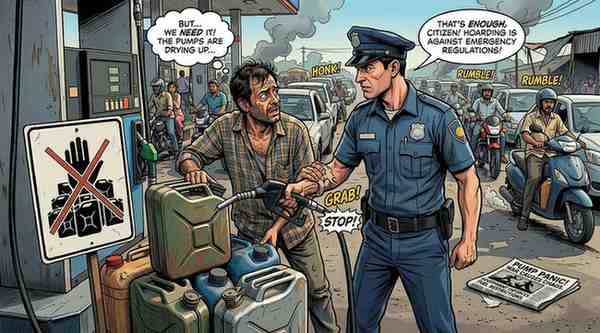
NEW DELHI, March 23, 2026 — The Indian government has moved swiftly to dismantle rumors of a domestic fuel crisis, assuring citizens that the nation’s energy reserves are secure despite the escalating Iran-Israel conflict. In an urgent briefing, officials confirmed that refineries across the country are operating at maximum capacity and possess sufficient crude inventory to maintain a steady supply.
LPG Stability Amid Global Turmoil
While the war in the Middle East has created “concerning” conditions, the Centre reports that domestic LPG production has remained resilient, currently reaching 40% of its target. Officials emphasized that there are no “dry outs” reported at retail outlets, and supply remains normal across all states.
To manage the surge in demand, the government has prioritized the shift to Piped Natural Gas (PNG). In just the last week:
- Infrastructure Surge: Over 13,700 new PNG connections were provided in top geographical areas.
- Consumer Shift: Approximately 75,000 households migrated from traditional LPG to piped networks.
- Strategic Allocation: Rajasthan has already requested an additional 10% LPG allocation to support its growing network expansion.
4,500 Raids: The War on Hoarding
To prevent artificial scarcity, the government has activated an aggressive enforcement network. Over 4,500 raids were conducted nationwide yesterday to target hoarders and black marketers attempting to capitalize on the war panic.
The crackdown was most intense in Uttar Pradesh with 1,100 raids, followed by operations in Punjab, Rajasthan, Delhi, and Jammu & Kashmir. Additionally, Oil Marketing Company (OMC) teams performed 1,800 surprise inspections at distribution points to ensure that fuel is reaching consumers rather than being diverted.
Digital Authentication and Institutional Safety
The Ministry noted that 93% of all refill bookings are now being processed online, allowing for real-time tracking and delivery authentication. This digital shift has significantly reduced “panic bookings,” which had threatened to clog the delivery system earlier this week.
To protect the most vulnerable sectors, the government has directed that 50% of the kerosene and commercial LPG allocations be reserved for hospitals and educational institutions. Control rooms have been established in 32 States and Union Territories to monitor local district-level committees.
Bottom Line
The era of reactive energy management has been replaced by a “zero-tolerance” enforcement policy. While the conflict in Iran poses a legitimate global threat, the Centre’s message to the Indian public is clear: the fuel is there, but the hoarding must stop. By using digital tracking and thousands of raids, the government is ensuring that the “dry out” remains a rumor rather than a reality.
Leave a Reply