
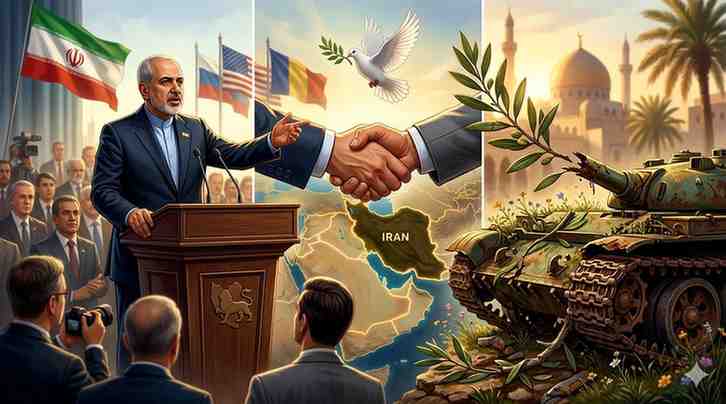
Tehran, April 2, 2026 — In a potential watershed moment for global security, Iran has officially signaled its willingness to end the current Middle East hostilities. The announcement, made by the Iranian President during a high-stakes dialogue with European Council President António Costa, marks the first time Tehran has moved toward a formal diplomatic exit strategy since the conflict escalated.
However, the “olive branch” comes with a significant condition: a permanent, binding security guarantee that prevents future attacks on Iranian soil.
The Demand for “Ironclad” Guarantees
Iran’s offer to de-escalate is not a simple white flag. Tehran is demanding a “binding commitment” that goes beyond verbal promises. The Iranian leadership is seeking:
- Total Security Sanctity: An end to all military strikes, including air raids, cyber warfare, and covert operations.
- Binding Commitments: A written, UN-backed agreement that cannot be scrapped by changing political administrations in Washington—a direct reference to the collapse of the 2015 JCPOA.
- Regime Survival: Explicit assurances that foreign powers will cease efforts to destabilize or overthrow the current leadership.
Why Now? The Pressures on Tehran
Analysts suggest that Iran’s sudden shift is fueled by a mix of internal and external pressures. Despite its defiant posture, the war has triggered massive economic strain. Inflation has surged, and oil exports through the Strait of Hormuz have faced critical bottlenecks.
Furthermore, with Donald Trump signaling a desire for a swift U.S. “exit” from the region, Tehran is attempting to control the narrative. By showing a willingness to end the war, Iran positions itself as a responsible global actor while putting the burden of peace squarely on Washington and Tel Aviv.
The Global Market Reaction
The mere hint of peace sent immediate shockwaves through the financial world.
- Stock Surge: The Dow Jones spiked by 2.5% within hours of the report.
- Oil Plunge: Crude oil prices, which had been hovering near $120, plummeted below $115 as the risk of a full-scale regional war appeared to recede.
The Sino-Pakistani “Five-Point Plan”
As Tehran negotiates with Europe, China and Pakistan have jointly introduced a “Five-Point Plan” to facilitate a regional ceasefire:
- Immediate Ceasefire: A total halt to all active military operations.
- Third-Party Mediation: Pushing for direct dialogue between the U.S. and Iran.
- Infrastructure Protection: Safeguarding nuclear plants and oil refineries from future strikes.
- Maritime Security: Ensuring safe passage through the vital Strait of Hormuz.
- UN-Centric Settlement: A long-term political solution based on sovereignty and non-intervention.
Bottom Line
Tehran has set a high bar for peace, using its “willingness to end the war” as a powerful negotiation tactic. While the U.S. remains wary of Iran’s nuclear ambitions, the sudden drop in oil prices reflects a world desperate for the “Digital Iron Curtain” of war to lift. For now, the ball is in Washington’s court: provide a guarantee of safety, or prepare for a prolonged cycle of aggression.
Leave a Reply