
Exploring India’s Democratic Evolution, Unified Electoral Vision, and Transparency in Leadership
Key Metrics:
- Voter Participation: India’s 2019 general elections saw a record voter turnout of 67.4%, reflecting strong public engagement in democratic processes.
- One Nation, One Election Proposal: The initiative aims to streamline governance by conducting simultaneous elections for the Lok Sabha, state assemblies, and local bodies.
- Global Benchmarks: India ranks as the world’s largest democracy, with over 900 million registered voters participating in elections.
- Media Transparency: Democracies like the United States and the United Kingdom hold regular press briefings from their heads of state or government, a practice India could adopt for enhanced transparency.
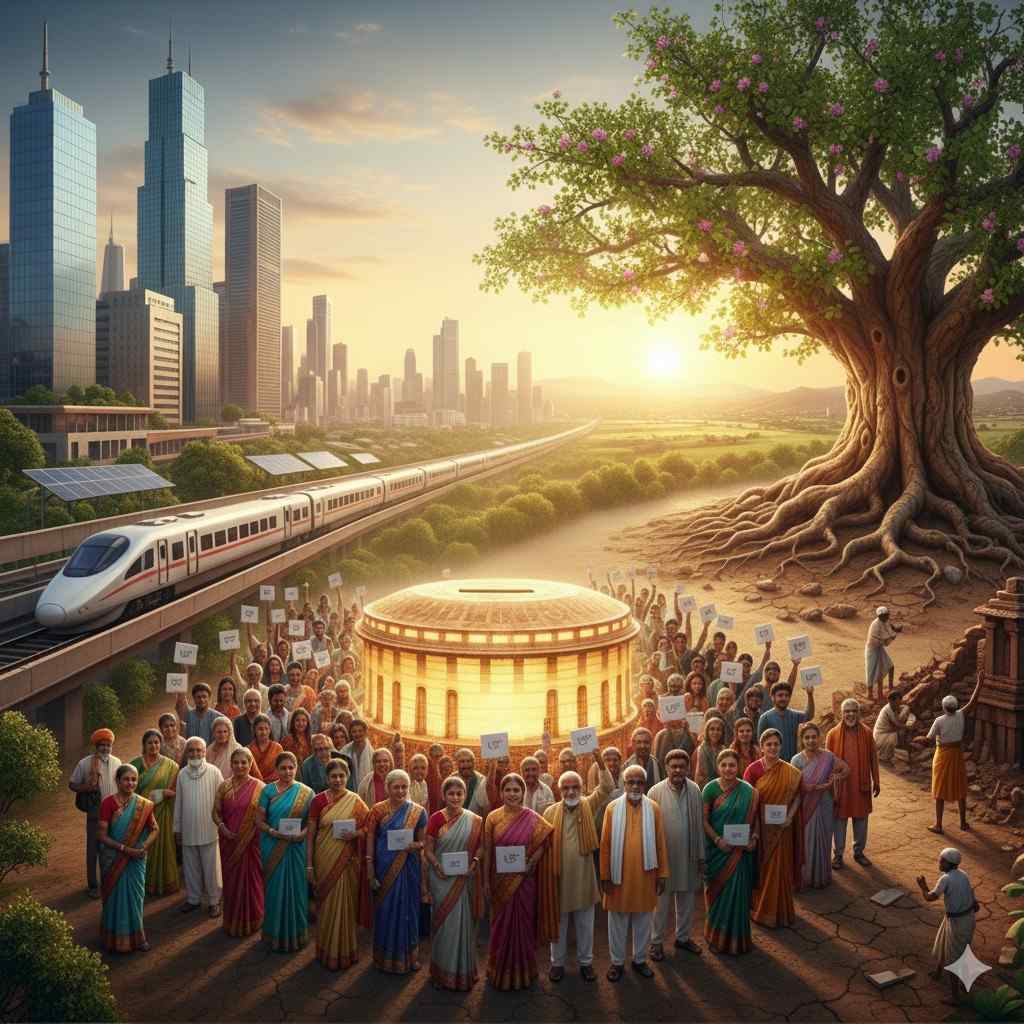
India’s democracy, the cornerstone of its identity, is a testament to its resilience and adaptability. From being a nation of princely states to evolving into the world’s largest democracy, India has charted an extraordinary journey of inclusion, progress, and reform. As the nation faces the challenges of a rapidly changing global landscape, new strategies such as One Nation, One Election and increased transparency through regular leadership interactions are shaping its future narrative.
Progress in Democracy: A Global Beacon
India’s democracy stands as a symbol of resilience and adaptability. With a population of over 1.4 billion, the nation has successfully maintained democratic practices since its independence in 1947. Elections, held at regular intervals, remain the lifeblood of the nation’s democratic framework, enabling citizens to exercise their right to choose their leaders.
Voter participation has steadily increased, with the 2019 general elections recording a turnout of 67.4%. This robust engagement underscores the commitment of Indian citizens to the democratic process, ensuring that governance reflects the will of the people.
Democratic reforms such as the introduction of electronic voting machines (EVMs) and voter verifiable paper audit trails (VVPATs) have enhanced electoral transparency, making India a global leader in democratic practices. However, the complexity of staggered elections across multiple states and local bodies has raised questions about efficiency and resource allocation.
One Nation, One Election: A Vision for Efficiency
The concept of One Nation, One Election seeks to address the logistical and financial challenges posed by staggered elections. Under this proposal, simultaneous elections for the Lok Sabha, state assemblies, and local bodies would be conducted, reducing the time, cost, and administrative burden associated with frequent polls.
This reform aims to create a more streamlined governance system, allowing governments to focus on policymaking without constant interruptions from election cycles. Countries like South Africa and Sweden have adopted similar practices, demonstrating their feasibility and effectiveness.
However, implementing this vision requires constitutional amendments and consensus among political parties. Critics have raised concerns about its potential impact on regional representation and the diversity of political discourse, emphasizing the need for careful planning and dialogue before its execution.
Transparency Through Leadership: The Need for Regular Media Interaction
Transparency is the bedrock of democracy, and regular communication between leadership and citizens is vital for fostering trust. While India’s Prime Minister and President address the nation during key events, there is room for more frequent, structured interactions with the media.
Weekly press briefings, as practiced in democracies like the United States and the United Kingdom, can enhance transparency and accountability. These interactions would allow leaders to address pressing issues, clarify government policies, and engage directly with citizens through the media.
Such a practice could counter misinformation, improve public understanding of governance, and strengthen India’s democratic ethos. With increasing global scrutiny on democratic practices, adopting regular leadership communication would set a new benchmark for transparency in governance.
Challenges and Opportunities
While India’s democratic journey has been remarkable, challenges like political polarization, regional disparities, and misinformation campaigns continue to test its resilience. Initiatives like One Nation, One Election and enhanced transparency mechanisms offer opportunities to address these issues and build a more inclusive, efficient, and accountable democracy.
The success of these reforms will depend on the collective will of political parties, institutions, and citizens. By fostering dialogue and consensus, India can reinforce its democratic framework and emerge stronger in the face of global challenges.
Conclusion
India’s narrative is one of continuous evolution, blending the principles of progress, democracy, and resilience into a cohesive tapestry. By embracing reforms like One Nation, One Election and enhancing transparency through regular media interactions, the country has the potential to set new global standards in democratic governance.
As India charts its course for the future, its commitment to inclusivity, accountability, and citizen engagement will remain the guiding light of its democratic journey. By balancing tradition with innovation, India can ensure that its democracy not only stands tall but also inspires the world.
Leave a Reply