
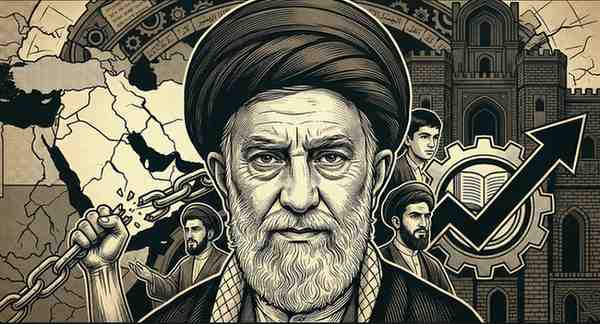
TEHRAN / NEW DELHI, March 1, 2026 — As Iran faces a historic power vacuum following the death of its Supreme Leader, the world is looking back at the 37-year reign of Ayatollah Ali Khamenei. From a young cleric in Mashhad to the most powerful man in the Islamic Republic, Khamenei’s life was defined by a fierce opposition to Western influence and the creation of a regional military network that redefined Middle Eastern geopolitics.
From Cleric to Revolutionary: The Making of a Leader
Born in 1939 in the religious city of Mashhad, Khamenei grew up in a devout household during the secular, Western-leaning rule of Shah Mohammad Reza Pahlavi. His political awakening began in the 1960s when he became a devoted student of Ayatollah Ruhollah Khomeini, the father of the Islamic Revolution. Khamenei spent years as an activist, facing six separate imprisonments by the Shah’s secret police, SAVAK, for spreading anti-monarchy messages.
The 1981 Assassination Attempt: A Physical Turning Point
One of the most defining moments in Khamenei’s life occurred on June 27, 1981. While addressing a mosque in Tehran, a bomb hidden inside a tape recorder exploded in front of him. The attack, claimed by the militant group Furqan, left Khamenei with a permanently paralyzed right arm and significant hearing loss. Defiantly, he later stated that as long as his “brain and tongue” functioned, he did not need his hands to lead the nation.
The Supreme Leader: Amending the Constitution
Khamenei served as Iran’s third President starting in 1981. However, his ascent to Supreme Leader in 1989 required an unprecedented legal maneuver. At the time of Khomeini’s death, Khamenei did not hold the highest religious rank of “Marja” required by the constitution. To ensure a smooth transition amid threats from Saddam Hussein’s Iraq, the Iranian government amended its constitution specifically to allow him to take the mantle of Supreme Leadership.
The Strategic Legacy: Proxy Wars and Nuclear Ambition
Under Khamenei’s 37-year rule, Iran’s foreign policy shifted from defense to a strategy of “forward defense.” He is credited with:
- The Axis of Resistance: Building a vast network of militant proxies, including Hezbollah, Hamas, and the Houthis, to wage a “proxy war” against Israel and the U.S.
- Nuclear Sovereignty: Overseeing a resilient nuclear program that successfully resisted decades of international sanctions and sabotage.
- Domestic Control: Crushing internal dissent, journalists, and student movements to maintain the “Velayat-e Faqih” (Guardianship of the Islamic Jurist).
Bottom Line
Ayatollah Ali Khamenei was the primary architect of modern Iran’s defiance. His death leaves behind a nation equipped with a formidable regional military apparatus, yet facing a citizenry increasingly hungry for the secular freedoms he spent his life dismantling. For many, his passing is the final chapter of the 1979 Revolution.
Leave a Reply