
Introduction
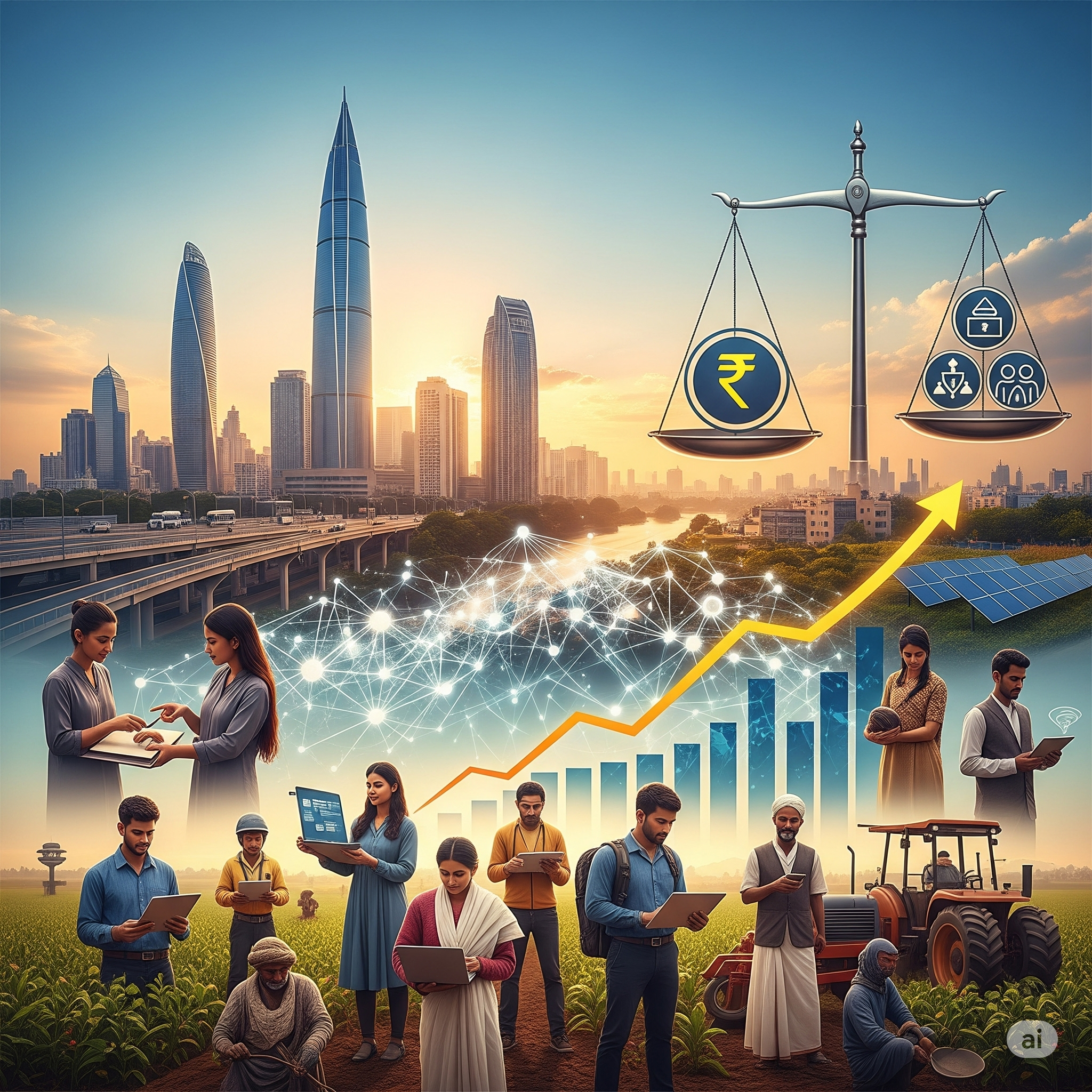
Public policy is a critical driver of economic transformation in India. Through initiatives aimed at liberalization, industrial growth, and social welfare, the government plays an instrumental role in crafting an economic environment that fosters development. Over the years, India’s public policy framework has evolved to address challenges like poverty, inequality, and globalization, ensuring a balanced approach to growth and inclusivity. This article examines how key public policies have shaped India’s economic landscape and explores their ongoing impact.
Major Public Policies Driving Economic Growth
1. Economic Liberalization (1991 Reforms)
The economic reforms of 1991 marked a watershed moment in India’s history, shifting from a closed economy to a market-driven model.
- Key Measures:
- Liberalization of foreign direct investment (FDI).
- Reduction of import tariffs and elimination of license raj.
- Privatization of state-owned enterprises.
- Impact:
- India’s GDP growth accelerated, averaging 6-7% annually in subsequent decades.
- Foreign exchange reserves surged, standing at over $600 billion as of 2023.
(Source: Reserve Bank of India (RBI))
2. Goods and Services Tax (GST)
Introduced in 2017, GST revolutionized India’s indirect tax structure by replacing multiple taxes with a unified system.
- Benefits:
- Simplified tax compliance for businesses.
- Boosted interstate trade by eliminating cascading taxes.
- Impact:
- Increased tax revenue, with collections reaching ₹1.5 lakh crore per month on average in 2023.
(Source: Ministry of Finance)
3. Make in India Initiative
Launched in 2014, this policy aims to transform India into a global manufacturing hub.
- Objectives:
- Increase the share of manufacturing in GDP to 25% by 2025.
- Create 100 million manufacturing jobs.
- Achievements:
- Attracted over $75 billion in FDI between 2014 and 2023 in sectors like electronics, automobiles, and defense manufacturing.
(Source: Department for Promotion of Industry and Internal Trade (DPIIT))
4. Pradhan Mantri Jan Dhan Yojana (PMJDY)
This flagship financial inclusion policy, launched in 2014, aims to bring every household into the formal banking system.
- Outcomes:
- Over 50 crore Jan Dhan accounts opened as of 2023.
- Enhanced access to credit and social security schemes for marginalized communities.
(Source: Ministry of Finance)
Public Policies Addressing Socio-Economic Challenges
1. National Rural Employment Guarantee Act (NREGA)
Introduced in 2005, NREGA guarantees 100 days of wage employment annually to rural households.
- Impact:
- Reduced rural unemployment and poverty.
- Empowered women, with over 50% of beneficiaries being female.
(Source: Ministry of Rural Development)
2. Ayushman Bharat – Pradhan Mantri Jan Arogya Yojana (AB-PMJAY)
Launched in 2018, this health policy provides free health coverage of up to ₹5 lakh per family per year to vulnerable populations.
- Achievements:
- Benefited over 22 crore individuals since its inception.
- Reduced out-of-pocket healthcare expenses significantly.
(Source: National Health Authority)
Public Policies in Emerging Sectors
1. Digital India Initiative
This policy aims to transform India into a digitally empowered society and knowledge economy.
- Key Measures:
- Expansion of broadband infrastructure to rural areas.
- Promotion of e-governance and digital literacy programs.
- Impact:
- Over 800 million internet users as of 2023, driving e-commerce and fintech growth.
(Source: Ministry of Electronics and Information Technology)
2. National Education Policy (NEP) 2020
The NEP 2020 focuses on transforming India’s education system to meet global standards.
- Key Features:
- Emphasis on vocational training and digital literacy.
- Integration of technology in education through e-learning platforms.
(Source: Ministry of Education)
Challenges in Implementing Public Policies
1. Bureaucratic Delays
Complex administrative processes often hinder the timely implementation of policies.
2. Regional Disparities
Unequal access to infrastructure and resources affects policy outcomes in rural and remote areas.
3. Political Polarization
Shifting political priorities can disrupt the continuity of long-term policies.
Future Pathways for Policy Innovation
1. Green Economy Policies
Introducing robust policies for renewable energy and sustainable development to align with global climate goals.
- Example: The National Solar Mission aims for 280 GW solar capacity by 2030.
(Source: Ministry of New and Renewable Energy)
2. Focus on Skill Development
Strengthening programs like Skill India to prepare India’s workforce for Industry 4.0.
3. Leveraging Technology in Governance
Expanding e-governance platforms to improve transparency and efficiency in policy delivery.
Opinionated Yet Balanced Perspective
Public policy in India has played a transformative role in shaping the economic landscape. Policies like GST, Make in India, and Ayushman Bharat have addressed structural challenges and fostered inclusive growth. However, addressing issues like regional disparities and bureaucratic inefficiencies is crucial to maximizing their impact. Future policies must balance growth with sustainability, equity, and innovation.
Conclusion
India’s public policy framework continues to evolve in response to dynamic economic and social challenges. By fostering innovation, inclusivity, and sustainability, public policies have the potential to unlock new opportunities and ensure balanced economic growth. Strengthening governance mechanisms and prioritizing citizen-centric approaches will be pivotal in shaping India’s economic future.
Leave a Reply