
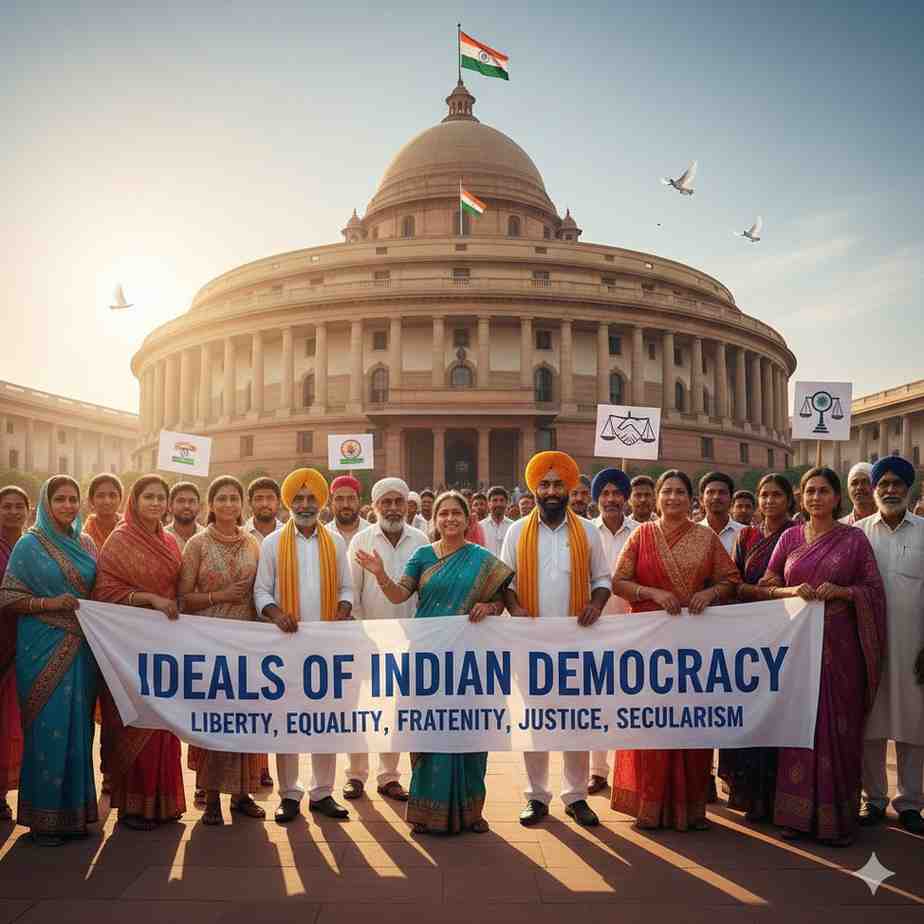
Exploring the Tensions Between Democratic Principles and Political Authority in India
Key Highlights
- Balancing Power and Principles: India ranks 46th in the Democracy Index 2024, reflecting both its democratic aspirations and challenges in governance (Economist Intelligence Unit).
- The Rise of Centralized Authority: Political centralization under leaders like Narendra Modi has raised questions about the coexistence of democratic ideals with strong executive power.
- Public Perception: A Pew Research survey in 2024 revealed that 59% of Indians believe political power often undermines the spirit of democracy.
Introduction
Democracy, often described as governance “of the people, by the people, for the people,” is founded on ideals such as equality, justice, and accountability. However, the exercise of power in democratic systems can sometimes challenge these principles. In India, a vibrant yet complex democracy, the coexistence of democratic ideals and political power is a constant balancing act. Can a nation uphold its democratic foundations while concentrating authority to achieve stability and progress?
The Evolution of Power in Indian Democracy
1. Centralized Leadership
- The Modi Era: Narendra Modi’s tenure has seen an emphasis on strong, centralized decision-making, with flagship programs like Digital India and Swachh Bharat Abhiyan showcasing the potential for rapid implementation.
- Criticisms: Opponents argue that the centralization of power undermines federalism, as seen in debates over GST distribution and state-level autonomy.
2. Historical Context
- Emergency (1975-77): Indira Gandhi’s declaration of Emergency marked a period where power overshadowed democratic freedoms, curtailing civil liberties and media independence.
- Recovery and Resilience: Post-Emergency reforms, such as strengthening the Election Commission, demonstrated India’s capacity to reaffirm democratic values.
Challenges to Democratic Ideals
1. The Nexus of Power and Populism
- Identity Politics: Electoral campaigns often focus on caste, religion, and regional divides, diverting attention from developmental issues.
- Majoritarianism: Critics argue that policies like the Citizenship Amendment Act (CAA) reflect a tilt toward majority community interests, challenging inclusivity.
2. Weakening Institutions
- Judicial Independence: Allegations of executive interference in judicial appointments and decisions raise concerns about the autonomy of democratic institutions.
- Media Under Pressure: India’s decline to 161st in the World Press Freedom Index in 2024 highlights challenges to free expression and the media’s role as a democratic watchdog.
Striking a Balance: Democracy and Power in Practice
1. Examples of Coexistence
- Atal Bihari Vajpayee: Vajpayee’s tenure exemplified how strong leadership can coexist with respect for democratic debate and coalition politics.
- Mahatma Gandhi’s Philosophy: Gandhi’s non-violent resistance against British rule balanced moral authority with grassroots mobilization, influencing democratic ideals globally.
2. Federalism as a Democratic Pillar
- State Autonomy: Empowering state governments through decentralization can balance national authority while addressing local needs.
- Success Stories: States like Kerala and Tamil Nadu demonstrate how strong state leadership can complement national democratic objectives.
The Path Forward
- Strengthening Institutions: Ensure the independence of the judiciary, Election Commission, and media to act as checks on executive overreach.
- Promoting Inclusive Policies: Encourage governance that addresses diverse socio-economic needs rather than pandering to majoritarian sentiments.
- Empowering Civil Society: Support grassroots movements and NGOs that uphold democratic principles and demand accountability.
- Civic Education: Foster public understanding of democratic values to empower citizens to hold leaders accountable for balancing power with principles.
Conclusion
The coexistence of democratic ideals and political power is both a challenge and an opportunity for India. While centralized authority can drive rapid progress, it must be tempered with accountability, inclusivity, and respect for institutional integrity. India’s democratic journey underscores the importance of vigilance and active citizen participation in preserving the delicate balance between power and principles. Ultimately, the success of democracy lies in ensuring that power serves the people, not the other way around.
Leave a Reply