
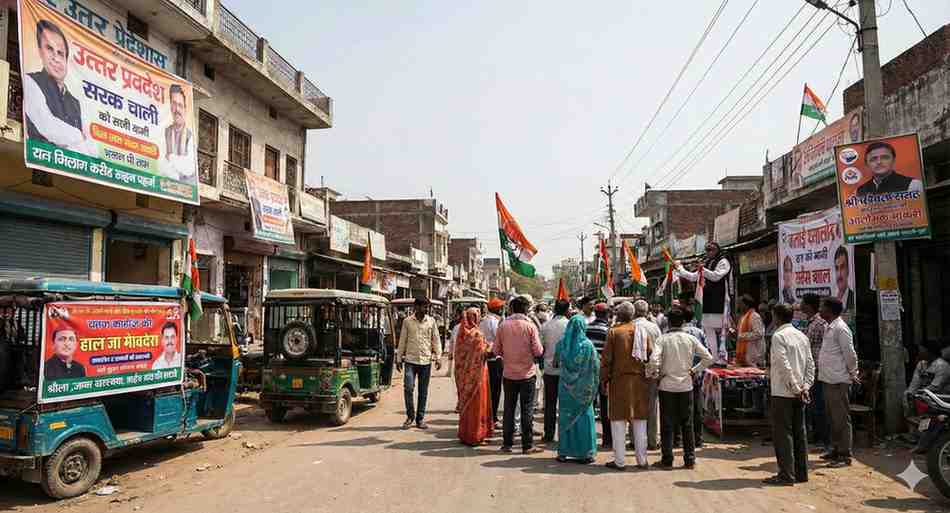
A Contest of Ideals and Power
Uttar Pradesh, India’s most politically consequential state, often serves as a crucible for the nation’s ideological and electoral battles. With its massive electorate and diverse socio-political landscape, the state embodies the tension between grassroots movements and institutional power. The question arises: Is the battle for UP’s soul being fought in the streets, through activism and public sentiment, or in the electoral arena, where political parties vie for dominance?
Key Metrics
- Population: Over 240 million, encompassing rural and urban divides.
- Lok Sabha Seats: 80, the largest representation in India’s parliament.
- Electoral Turnout (2022): Approximately 59.4%, reflecting both engagement and voter apathy.
- Protests: Over 200 significant public demonstrations recorded in the past decade, spanning issues from agrarian distress to communal harmony.
The Streets: Voices of the People
Grassroots movements and public demonstrations have long been a part of Uttar Pradesh’s socio-political fabric. Issues such as farmers’ rights, unemployment, and caste-based discrimination have often driven people to the streets, creating powerful narratives that influence public discourse and, eventually, electoral strategies.
- Farmers’ Protests: The 2020-2021 protests against agricultural reforms galvanized rural communities, particularly in western UP, highlighting agrarian distress and the power of collective action.
- Caste Movements: Dalit-led movements, often spearheaded by the Bahujan Samaj Party (BSP) or grassroots organizations, underscore persistent social inequities.
- Youth Mobilization: Rising unemployment and educational challenges have sparked youth-led protests, with demands for systemic reform and job creation.
These movements, while impactful, often struggle to maintain momentum or translate into sustained political change, raising questions about their long-term effectiveness.
The Polls: Institutional Power Plays
Elections remain the primary mechanism through which power is contested and distributed in Uttar Pradesh. The state’s electoral dynamics are shaped by caste alliances, religious identities, and development narratives, often reflecting the broader ideological battles being waged nationally.
- Caste Coalitions: Political parties, from the BJP to the SP and BSP, rely on strategic caste-based mobilization to consolidate their vote banks.
- Religious Polarization: Issues such as the Ram Mandir in Ayodhya and communal tensions frequently dominate electoral narratives, influencing voter behavior.
- Developmental Promises: Infrastructure projects, welfare schemes, and employment initiatives form the backbone of electoral campaigns, appealing to a population seeking tangible improvements.
While elections provide a structured forum for resolving conflicts, their competitive nature often leads to divisive rhetoric and a focus on short-term gains over long-term vision.
The Intersection of Streets and Polls
The relationship between grassroots movements and electoral outcomes is complex and often symbiotic. Protests and public demonstrations can shape electoral agendas, forcing parties to address pressing issues. Conversely, election results influence the viability and direction of street-level activism.
For example:
- The 2020-2021 farmers’ protests significantly influenced the BJP’s performance in western UP during the 2022 assembly elections.
- Caste-based movements have historically translated into political mobilization, with the BSP emerging as a key player representing Dalit aspirations.
Challenges in Bridging the Divide
Despite their interdependence, the streets and polls often operate in silos, each constrained by its limitations:
- For Protests: Lack of sustained leadership, fragmentation, and suppression by authorities can dilute their impact.
- For Elections: The dominance of money, media, and identity politics often overshadows genuine grassroots issues.
Conclusion: A Dual Battlefield
The battle for Uttar Pradesh’s soul is being fought both in its streets and at the ballot box, each arena reflecting different facets of the state’s complex identity. While grassroots movements amplify the voices of the marginalized and highlight systemic issues, electoral processes provide the mechanism for institutional change. The challenge lies in bridging these realms, ensuring that the passion and urgency of the streets inform the policies and priorities of those elected to govern. Only through this integration can Uttar Pradesh truly harness its potential and address the aspirations of its diverse populace.
Leave a Reply