
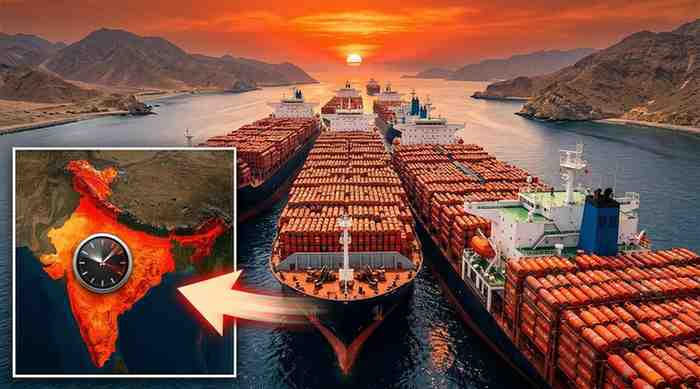
New Delhi, March 2026 — India is racing against time as a maritime standoff near the Strait of Hormuz has left a massive shipment of 1.9 million LPG cylinders stranded, threatening to disrupt kitchens across the nation.
The Indian government has initiated urgent, high-level diplomatic talks with Iran to secure “safe passage” for a fleet of tankers caught in one of the world’s most volatile shipping lanes. What officials describe as a “logistical priority,” experts call a direct hit to India’s energy lifeline.
The Numbers: 1.9 Million Cylinders at a Standstill
The scale of the bottleneck is staggering. Currently, 22 Indian-flagged vessels are anchored on the western side of the Strait, near ports in Qatar and the UAE. Among these are:
- 6 LPG Tankers: Carrying 27,000 tonnes of cooking gas—enough to supply India’s entire household demand for three full days.
- 4 Crude Oil Carriers & 1 LNG Vessel: Essential for fueling the nation’s refineries and power sectors.
While three ships—the Shivalik, Nanda Devi, and Jag Ladki—managed to cross and dock at Indian ports earlier this week, the remaining fleet remains in limbo, waiting for a diplomatic green light.
The “Staggered Movement” Strategy
Negotiations between New Delhi and Tehran have centered on a staggered movement plan. Rather than attempting to move the entire fleet at once—which could invite security risks or further delays—officials are pushing to release the ships one or two at a time.
Back home, the Ministry of Ports has already alerted western coast facilities to keep anchorage space vacant. The goal is “zero-wait” unloading; the moment a ship touches Indian waters, it must be drained and the fuel dispatched to bottling plants immediately.
Panic on the Ground: Shortages and Electric Stoves
The ripple effects of the stranded vessels are already visible in Indian cities. Reports of LPG shortages have triggered:
- Panic Bookings: Families are rushing to book refills well in advance, fearing a total dry-out.
- Long Queues: Distribution centers are seeing lines reminiscent of past fuel crises.
- Shift to Electric: A sudden spike in the sale of induction cooktops and electric stoves has been noted as urban households seek a backup for their gas stoves.
Even the hospitality sector is feeling the heat, with several small eateries forced to cut down their operating hours due to inconsistent supply.
Energy Security: Searching for a Plan B
This crisis has exposed India’s heavy reliance on the West Asian route, which accounts for 90% of its LPG imports and nearly 50% of its crude oil. To prevent a total energy blackout, the government has started exploring alternative sources.
India is now looking at unconventional suppliers ranging from Morocco to Belarus. Simultaneously, domestic refineries have been ordered to pivot their operations, diverting production away from petrochemicals to maximize LPG output for Indian homes.
Bottom Line
The standoff at Hormuz is no longer just a shipping or geopolitical issue; it is a kitchen-table crisis. As the External Affairs Ministry engages with global counterparts, the message is clear: India’s energy security cannot be held hostage by maritime instability. Until the final tanker docks, the stability of the Indian household remains on edge.
Leave a Reply