
Sacred Knowledge or Outdated Dogma? India’s Modern Struggle with Ancient Texts
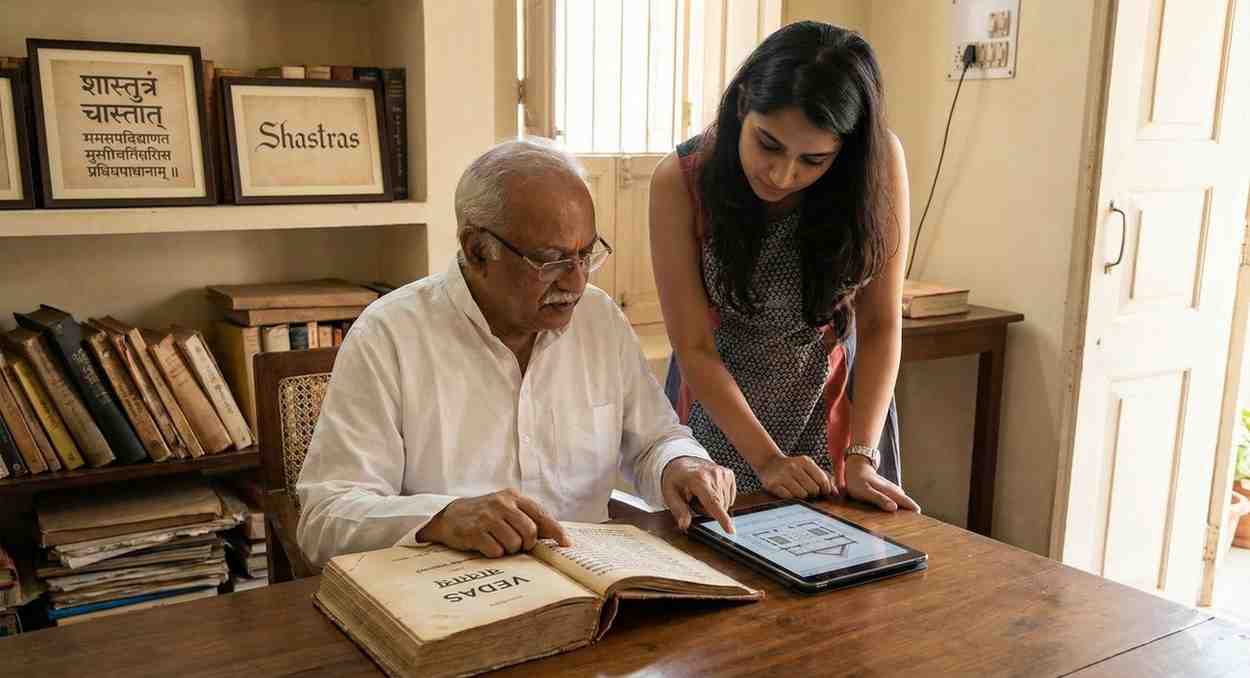
India’s ancient scriptures, the Vedas and Shastras, have long been revered as reservoirs of wisdom. Rooted in millennia-old traditions, these texts offer insights on spirituality, ethics, governance, and even health. As India seeks to balance tradition and modernity, their relevance has come under renewed scrutiny, sparking debates on their application in contemporary life.
While many hail these texts as sources of timeless guidance, critics question whether their teachings align with today’s social realities. Are the Vedas and Shastras tools for enlightenment, or are they being misused to justify outdated practices?
Rediscovering Ancient Texts in a Modern Era
The Vedas—Rigveda, Samaveda, Yajurveda, and Atharvaveda—contain hymns and philosophical treatises that form the backbone of Hinduism. The Shastras, which include texts like the Manusmriti and Arthashastra, provide frameworks for societal order, governance, and morality. Their enduring influence is evident in various aspects of Indian culture, from rituals to political ideologies.
A 2023 report by the Ministry of Culture revealed that interest in these texts has surged, aided by government initiatives to promote Sanskrit studies and digitize ancient manuscripts. Projects like the Bharat Veda Portal have made these scriptures more accessible, drawing global interest. The Indian Institute of Technology (IIT) Delhi, in collaboration with AI researchers, recently analyzed linguistic patterns in Vedic hymns, showcasing their relevance in modern linguistic studies.
Controversy over Interpretation
Despite their cultural significance, interpretations of these texts often spark controversy. The Manusmriti, for example, has faced criticism for its verses on caste and gender roles. Critics argue that misusing such texts perpetuates inequality, as evidenced by a National Sample Survey Office (NSSO) study in 2023 that highlighted ongoing caste-based discrimination in rural areas.
On the other hand, scholars like Dr. Subhash Kak, an authority on Vedic philosophy, emphasize the need for contextual understanding. “The Vedas are not just religious texts; they are philosophical guides that use metaphorical language to convey universal truths,” Dr. Kak said during a lecture earlier this year.
Revival Through Education and Policy
Efforts to integrate these texts into modern education systems are gaining traction. The National Education Policy 2020 emphasizes the inclusion of ancient Indian knowledge systems, aiming to introduce young learners to the philosophical depth of the Vedas and Shastras. Programs at premier institutions like Banaras Hindu University are designed to bridge the gap between traditional knowledge and contemporary issues.
In addition, public initiatives such as the International Day of Yoga, rooted in Vedic teachings, have drawn attention to the practical applications of these texts. The Ministry of AYUSH reported a 20% increase in global participation in yoga sessions in 2023, underscoring the relevance of Vedic wisdom in promoting health and wellness.
The Road Ahead
As India navigates its relationship with these ancient texts, the challenge lies in discerning their philosophical essence while discarding elements that conflict with modern values of equality and justice. Misinterpretation risks turning sacred knowledge into dogma, yet dismissing these texts outright undermines their potential to guide humanity toward self-awareness and harmony.
The resurgence of interest in the Vedas and Shastras reflects a broader cultural awakening. However, the real test will be whether this revival leads to greater understanding and inclusivity or becomes a tool for division in a rapidly modernizing society.
Leave a Reply