
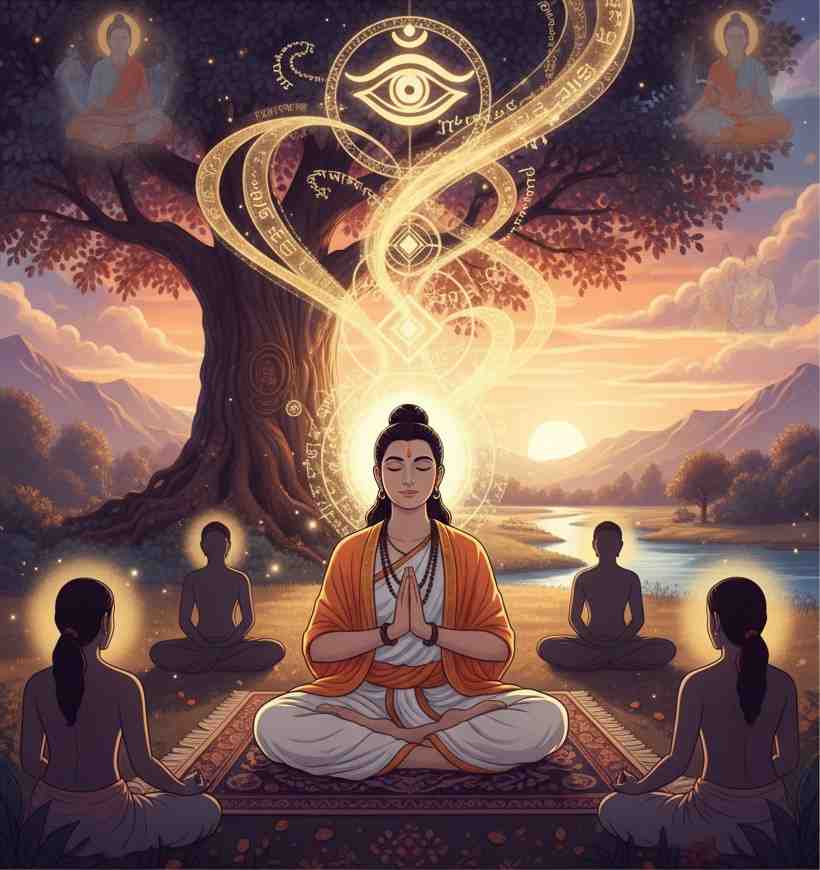
“Beyond the Words: Exploring the Deep Significance of Vedic Chanting in Modern Hinduism”
Chanting Vedic mantras has long been a cornerstone of Hindu spiritual practice, revered for its power to purify the mind, invoke divine blessings, and connect with the cosmic order. However, in contemporary discussions, a question arises: Is chanting these ancient mantras a profound spiritual practice that leads to personal transformation, or has it simply evolved into a cultural tradition, practiced without deeper understanding? This examination delves into the multifaceted nature of Vedic chanting, exploring its spiritual significance and its place in modern Hindu life.
The Spiritual Significance of Vedic Mantras
- The Power of Sound and Vibration:
- Vedic mantras are more than just words—they are believed to carry profound vibrational power that resonates with the universe. The ancient texts emphasize that sound, when chanted correctly, creates a connection between the physical world and the divine. The Rigveda introduces the concept of the primordial sound Om, believed to be the source of creation. In this sense, chanting Vedic mantras can be viewed as a form of spiritual resonance, where the vibrations align with cosmic forces to bring about transformation.
- Purification and Mindfulness:
- Chanting mantras is often seen as a tool for mental purification. In the Upanishads, the practice of repeating mantras is linked to meditative focus, guiding the practitioner toward self-realization and liberation (moksha). The rhythmic repetition of sacred syllables is said to calm the mind, dispel negativity, and align one’s consciousness with higher spiritual realities.
- Connection with the Divine:
- In Vedic thought, mantras are more than a form of prayer—they are seen as powerful invocations to the gods. The chanting of mantras, especially those dedicated to deities like Agni (fire), Surya (sun), and Indra (rain), is believed to invite divine presence into the material world. This divine connection is not merely symbolic but a real interaction with the cosmic forces that govern existence.
Cultural Tradition and Rituals: The Secular Side of Vedic Chanting
- Cultural Heritage and Preservation:
- Over time, Vedic chanting has become an integral part of ritualistic practices within Hindu culture, whether at temples, during festivals, or personal rites of passage. In many ways, it has evolved from a strictly spiritual pursuit into a cultural tradition that preserves the continuity of Hindu identity.
- For many Hindus, especially those less engaged with the spiritual dimensions of chanting, Vedic mantras are an important way to connect with their ancestral heritage and maintain cultural continuity. The chanting of mantras during life events like marriages, births, and religious festivals reinforces communal identity, making it an essential cultural practice in Hindu households.
- Community Bonding:
- In communities, chanting Vedic mantras brings people together during communal prayers and rituals, fostering a sense of shared faith and belonging. Whether it’s during large-scale events like Navaratri or more personal moments like the Sankat Mochan Hanuman Ashtakshara chants, these mantras help strengthen the collective spirit, creating bonds of solidarity through shared devotion and tradition.
The Intersection: Spiritual Practice or Cultural Tradition?
While chanting Vedic mantras has profound spiritual significance, its role in modern Hinduism is multifaceted. For some, chanting remains a spiritual discipline, a deeply personal path to self-realization and divine connection. For others, it has become an important cultural practice, a way to preserve rituals and maintain religious identity. Both aspects are not mutually exclusive—rather, they coexist, enhancing the spiritual fabric of Hindu life in different ways.
- Spirituality Beyond Tradition:
- Many modern Hindus, especially those influenced by global spiritual movements like Transcendental Meditation or mindfulness practices, view Vedic chanting not just as a cultural ritual but as a personal spiritual tool. In this context, chanting can serve as a means of deepening one’s connection to the self and the divine, transcending cultural boundaries and becoming a universal tool for mental and spiritual well-being.
- Cultural Tradition with Spiritual Underpinnings:
- For those rooted in traditional practices, chanting serves to reinforce a sense of cultural continuity. Though they may not always focus on the deep philosophical meanings behind the words, the act of chanting still carries spiritual power, as the vibrations themselves are believed to have inherent transformative properties.
Conclusion: A Dual Role for Vedic Chanting
Vedic chanting exists at the crossroads of spiritual practice and cultural tradition. While its philosophical and metaphysical depth offers a path to spiritual awakening, its cultural significance helps preserve the rich heritage of Hindu rituals and community practices. The beauty of Vedic chanting lies in its flexibility—whether as a profound, transformative spiritual practice or as a vibrant cultural tradition, it remains an integral part of Hindu life. The choice is left to the individual practitioner: to chant for personal transformation or to honor the time-honored customs passed down through generations, with both paths leading to a deeper connection with the divine and the cosmos.
Leave a Reply