
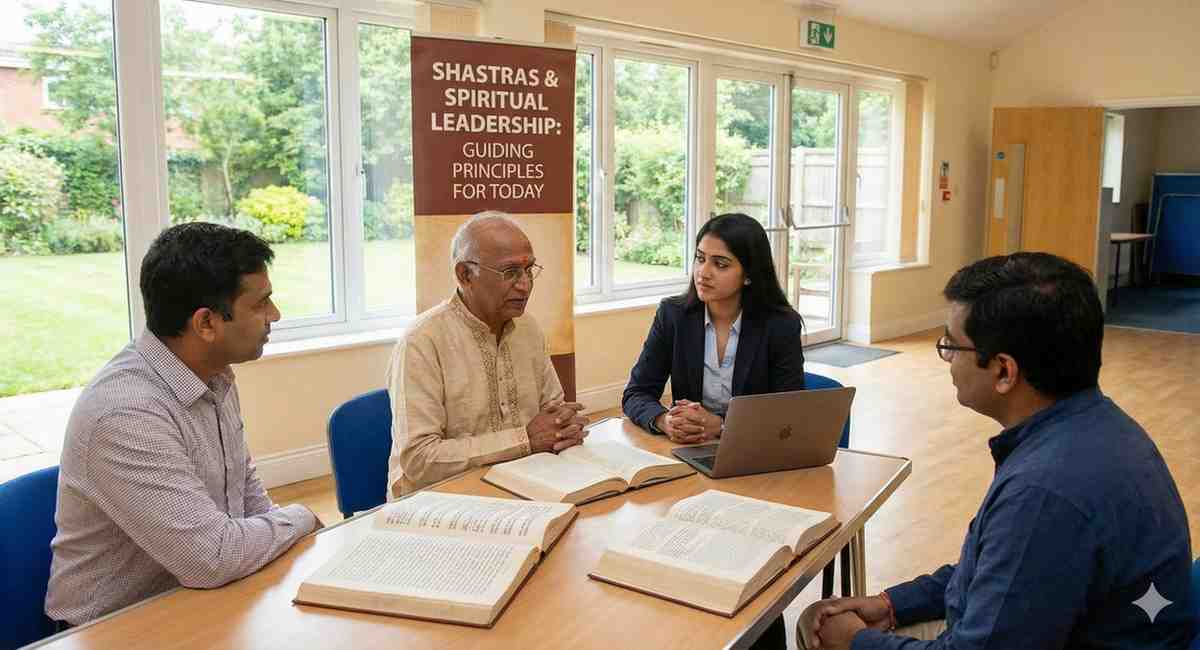
Ancient Wisdom for Modern Leadership
The Shastras—sacred scriptures in Hinduism—serve as profound repositories of wisdom, offering timeless principles on governance, ethics, and leadership. From the Bhagavad Gita to the Arthashastra, these texts emphasize that true leadership arises from selflessness, vision, and alignment with universal principles. In today’s fast-paced world, where ethical lapses and power struggles often dominate headlines, the teachings of the Shastras provide a roadmap for leaders to inspire trust, foster unity, and serve society.
1. Leadership Insights from the Shastras
Bhagavad Gita: Leading Through Dharma
- Key Principle: The Bhagavad Gita emphasizes dharma (righteous duty) as the cornerstone of leadership. Lord Krishna’s counsel to Arjuna underscores that a leader must act selflessly, prioritizing the greater good over personal gain.
- Relevance Today: Leaders in politics and business can learn from Krishna’s call for ethical decision-making, especially in moments of crisis.
Arthashastra: Governance and Strategy
- Key Principle: Composed by Chanakya, the Arthashastra offers detailed guidance on governance, diplomacy, and administration. It emphasizes pragmatism, foresight, and adaptability as critical traits for effective leadership.
- Example: The emphasis on transparency and accountability in governance resonates in modern demands for ethical corporate and political leadership.
Manusmriti: Justice and Fairness
- Key Principle: The Manusmriti outlines the duties of rulers and emphasizes justice, fairness, and the welfare of all citizens. A leader, according to the text, must ensure social harmony and uphold ethical conduct.
- Modern Implications: In an age of growing inequality, these teachings inspire leaders to prioritize inclusivity and fairness.
2. Lessons for Today’s Leaders
1. Selfless Service
- The Shastras highlight that leadership is fundamentally about serving others. Leaders like Mahatma Gandhi exemplified this principle, using the teachings of the Gita to inspire movements rooted in non-violence and justice.
2. Integrity and Vision
- Ethical lapses in politics and business underline the need for leaders to prioritize integrity. The Shastras teach that leaders must have a clear vision aligned with long-term societal welfare, not just short-term gains.
- Modern Example: Leaders like Ratan Tata have demonstrated how ethical decision-making and social responsibility can coexist with success.
3. Balancing Power with Compassion
- Chanakya’s Arthashastra advises rulers to combine strength with empathy, ensuring stability while addressing the needs of the vulnerable.
- Global Context: Today’s humanitarian crises call for leaders who can balance power with compassion, addressing challenges like climate change and social inequality.
3. Challenges in Today’s Leadership
- Ethical Dilemmas: The increasing focus on profits and political gains often leads to compromises in ethical standards. The Shastras call for leaders to act with viveka (discernment), ensuring their decisions benefit the collective.
- Polarization: In a divided world, the principles of unity and inclusivity emphasized in the Shastras are more relevant than ever.
Conclusion: A Call to Lead with Wisdom
The Shastras are not relics of the past but dynamic guides for navigating modern leadership challenges. They remind us that true leaders are those who act selflessly, uphold ethical standards, and serve as custodians of societal welfare.
In an era that demands accountability and vision, today’s leaders—whether in politics, business, or community roles—can draw from these ancient texts to inspire trust, foster unity, and lead with purpose. The question is, will they rise to the challenge?
Leave a Reply