
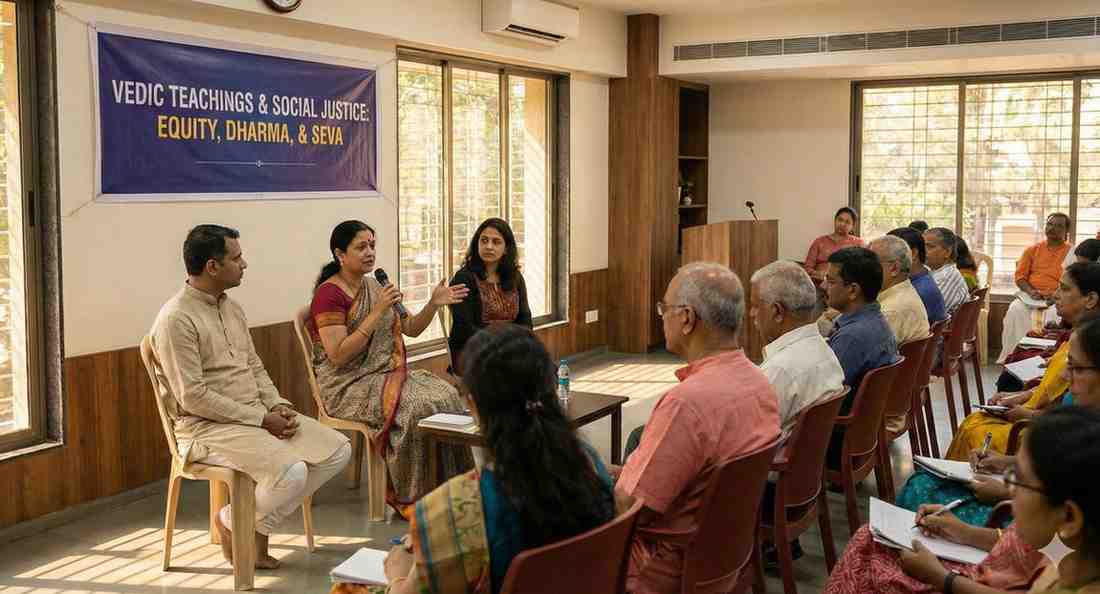
“Harmony and Balance: Exploring Social Justice Through the Lens of Vedic Philosophy”
Vedic teachings, often associated with spirituality and metaphysics, also contain profound insights on ethical governance, human rights, and societal balance. At their core, the Vedas emphasize rita (cosmic order) and dharma (righteousness), which extend beyond individual morality to encompass social justice. While the texts were written in a historical context vastly different from today’s world, their principles offer timeless guidance for addressing modern social challenges.
Core Teachings with Universal Appeal
- Unity of Existence:
- The Rigveda’s declaration, “Ekam Sat Vipra Bahudha Vadanti” (Truth is one, but the wise call it by many names), highlights the inclusivity of Vedic thought. This idea has influenced interfaith dialogues and global spiritual movements, fostering respect for diverse paths to truth.
- Karma and Dharma:
- Vedic concepts of karma (action and consequence) and dharma (righteous duty) have found a place in global ethical frameworks, encouraging personal accountability and moral living.
- Self-Realization and Liberation:
- The Upanishads, with their emphasis on Atman (self) and Brahman (universal consciousness), have inspired individuals worldwide to seek spiritual growth through introspection and self-awareness.
Global Movements Influenced by Vedic Philosophy
- Yoga and Meditation:
- Practices rooted in Vedic philosophy, such as yoga and meditation, have become global phenomena. The United Nations’ recognition of International Yoga Day underscores yoga’s universal appeal. Techniques like pranayama (breath control) and mantra chanting are now integral to wellness programs and mindfulness practices.
- Transcendental Meditation (TM):
- Popularized by Maharishi Mahesh Yogi, TM draws directly from Vedic teachings, particularly the Upanishads, to offer a practical approach to achieving mental clarity and spiritual peace. Celebrities, professionals, and wellness enthusiasts across the globe embrace TM for its scientifically backed benefits.
- Philosophical Movements:
- Western thinkers such as Ralph Waldo Emerson and Henry David Thoreau found inspiration in the Upanishads, integrating Vedic concepts into Transcendentalist philosophy. Similarly, the New Age movement has adopted Vedic ideas about consciousness and universal energy.
Relevance in Contemporary Spirituality
- Ecological Harmony:
- The Vedic reverence for nature, exemplified through hymns dedicated to elements like fire (Agni), water (Varuna), and the sun (Surya), aligns with modern environmental ethics. Spiritual movements promoting sustainability often draw parallels with Vedic principles of living in harmony with nature.
- Mindfulness and Mental Well-being:
- Vedic practices have proven effective in addressing modern challenges like stress and anxiety. Studies on meditation and yoga validate their transformative effects on mental health, making them accessible to people of all backgrounds.
- Interfaith Harmony:
- The inclusivity of Vedic teachings encourages dialogue and understanding among different religions, fostering a global culture of coexistence and mutual respect.
Challenges and Opportunities
- Cultural Appropriation:
- While Vedic concepts have gained popularity, there is concern about their commodification and dilution in global contexts. Preserving their authenticity while adapting them for modern use is a delicate balance.
- Expanding Accessibility:
- Efforts like the Digital Veda Library and translations of Vedic texts into multiple languages aim to make these teachings accessible to a global audience without losing their essence.
Conclusion
The influence of Vedic philosophy on global spirituality is a testament to its timeless relevance and universal appeal. From yoga studios in New York to meditation retreats in Bali, Vedic teachings have reshaped the way people approach spirituality, wellness, and ethics.
By integrating ancient wisdom with modern practices, Vedic philosophy continues to inspire individuals and communities worldwide, serving as a bridge between the material and the metaphysical, the personal and the universal. Its enduring legacy proves that the Vedas are not relics of the past but dynamic guides for the spiritual journey of humanity.
Leave a Reply