
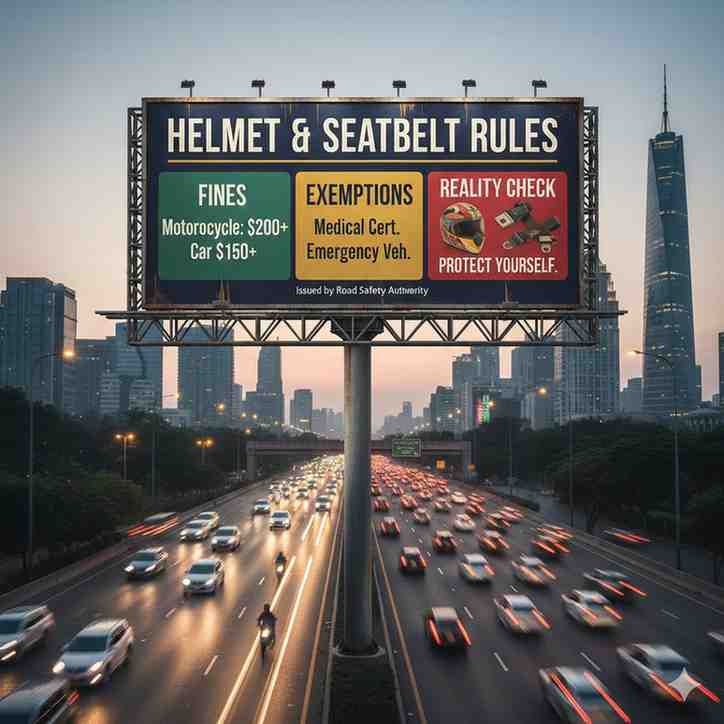
Key highlights
- Central law provides explicit penalties for not wearing protective headgear and for seatbelt/child seating compliance.
- Rules are getting more “engineered,” not just enforced—MoRTH has notified seat-belt reminder requirements for rear seats in newer vehicles. Ministry of Road Transport & Highways
- Reality check: enforcement varies, but e-challans and accident liability don’t.
Let’s strip it down: in 2026, the rules aren’t “new,” but compliance expectations are climbing because enforcement is increasingly automated and vehicle safety design is being upgraded.
What the law penalizes (the part that hurts your wallet)
The Motor Vehicles Act includes penalties for:
- not wearing protective headgear (helmet-related offence)
- seat belt and child seating compliance
These are not “guidelines”—they are legally framed penalties in the Act.
What’s changing in 2026: the car itself starts policing you
MoRTH’s notified amendments include a requirement that certain vehicles manufactured on/after specified dates meet seat belt reminder requirements for rear seats (front-facing rear seats for M1 category vehicles as per the notified standard timeline). Ministry of Road Transport & Highways
Translation: the vehicle will nag you more, and enforcement has better corroboration.
Exemptions: where people get confused
Exemptions can exist, but they are not a free-for-all. They are typically category- and condition-based (often tied to notified rules or specific legal provisions). If you’re relying on an “exception,” make sure it’s documented, not hearsay.
Scenario (what to do when you’re stopped)
You’re on a scooter. You have no helmet.
Even if the local cop seems negotiable, the offence is still an offence, and digital challans can land later. The smarter move: comply immediately, pay officially if challaned, and don’t convert it into a “debate” on the roadside.
You’re in a car. Rear passenger unbuckled.
In 2026, this is increasingly visible—through checks, through reminders, and through post-accident liability narratives. Safer to treat rear belts like front belts.
Small questions people search
Do I need to show physical documents?
In many cases, digital document systems reduce friction—but state-level practice varies. The safest strategy is: keep documents valid + accessible digitally and physically when possible.
Is this just about fines?
No. After an accident, compliance affects liability, insurance scrutiny, and your own injury odds. The fine is the cheapest part of the story.
Leave a Reply