
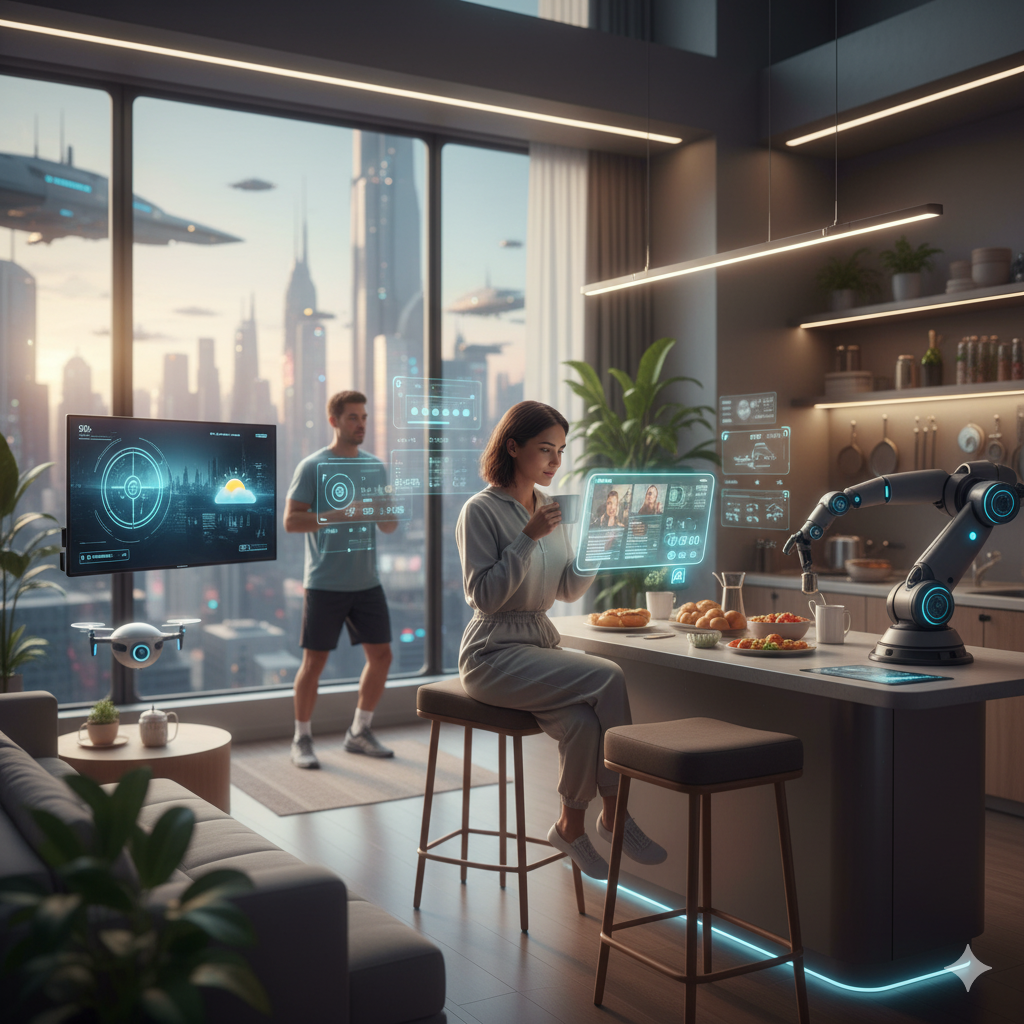
Smarter Living: How AI is Simplifying Daily Routines
Introduction: AI at the Heart of Modern Living
From your morning coffee to your evening workout, Artificial Intelligence (AI) has quietly woven itself into the fabric of everyday life. Whether it’s powering virtual assistants, optimizing household tasks, or improving how we work and play, AI is making daily routines more convenient, efficient, and personalized.
AI’s ability to learn, adapt, and predict human behavior allows us to save time, reduce effort, and achieve more. From smart home devices to personalized recommendations, AI is becoming the ultimate life hack.
Key Insights:
- Time-Saving Tech: AI-powered solutions can save individuals an average of 2-3 hours a week by automating repetitive tasks (Statista, 2023).
- Personalization Boom: 78% of consumers say AI-powered personalization enhances their daily experiences (McKinsey, 2023).
- Energy Efficiency: AI-driven smart devices reduce household energy consumption by 20%, contributing to sustainability (IEA, 2023).
How AI is Enhancing Everyday Life
1. Smarter Home Management
AI-powered smart home systems automate everything from lighting and temperature to security and entertainment. These systems learn your preferences and adjust settings to maximize comfort and efficiency.
- Example: Google Nest and Amazon Alexa control appliances, monitor energy usage, and ensure security.
- Impact: AI-enabled smart home devices can reduce electricity bills by up to 15% annually (Energy Star, 2023).
2. Personalized Recommendations
AI powers the algorithms behind your favorite streaming platforms, online stores, and food delivery apps, ensuring you always find what you’re looking for.
- Example: Netflix AI recommends shows and movies based on your viewing history, while Spotify AI curates personalized playlists.
- Impact: Personalized recommendations increase user satisfaction by 30% and engagement by 25% (Forbes, 2023).
3. Streamlined Shopping
AI makes shopping faster and more enjoyable with virtual assistants, chatbots, and augmented reality (AR). From groceries to gadgets, AI ensures convenience at every step.
- Example: Amazon AI suggests products based on browsing history, while apps like Zara use AR to visualize outfits.
- Impact: AI-powered e-commerce improves conversion rates by 20% (Statista, 2023).
4. Efficient Travel and Navigation
AI optimizes routes, predicts traffic patterns, and provides real-time travel updates, making commuting and traveling hassle-free.
- Example: Google Maps and Waze AI use predictive algorithms to suggest faster routes and avoid congestion.
- Impact: AI-powered navigation reduces travel time by an average of 15% for daily commuters (McKinsey, 2023).
5. Health and Fitness Support
AI tracks your health metrics, suggests workout routines, and offers nutritional advice tailored to your goals.
- Example: MyFitnessPal tracks calories and suggests meal plans, while Peloton AI personalizes workout intensity.
- Impact: AI-driven fitness tools improve user adherence to health goals by 40% (NIH, 2023).
6. Financial Management Made Simple
AI streamlines personal finance by automating budgeting, tracking expenses, and offering investment insights.
- Example: Apps like YNAB (You Need A Budget) and Digit AI analyze spending patterns and recommend savings strategies.
- Impact: AI-based financial tools increase savings by 20% on average (PwC, 2023).
Statistical Highlights:
- Adoption Rates: 72% of households in urban India use at least one AI-enabled device, from smart TVs to virtual assistants (NASSCOM, 2023).
- Convenience Boost: 65% of users report improved convenience and productivity due to AI-powered tools (Forbes, 2023).
- Cost Savings: AI-driven solutions reduce energy, time, and financial waste, saving households an average of ₹15,000 annually (IEA, 2023).
The Controversy: Convenience at What Cost?
While AI brings unparalleled convenience, critics argue about privacy and over-reliance. A survey by the World Economic Forum (2023) found that 38% of users worry about how their data is collected and used by AI-powered devices, raising concerns about transparency and security.
Global Comparisons:
- U.S. and Europe: AI is widely integrated into smart homes, healthcare, and retail, with a focus on sustainability and personalization.
- India: AI adoption is surging, particularly in urban centers, with a focus on e-commerce, smart homes, and navigation.
Forward Outlook: The Future of AI in Everyday Life
- Hyper-Personalization: AI will offer even deeper insights, tailoring experiences to individual habits and preferences.
- Sustainability Integration: AI will enhance energy-saving solutions, such as optimizing renewable energy usage in homes.
- Voice and AR Dominance: Voice assistants and augmented reality will become the primary interfaces for daily AI interactions.
Reflective Thought:
AI is no longer a futuristic concept—it’s a practical reality making everyday life simpler, smarter, and more efficient. As these technologies continue to evolve, they will not only enhance convenience but also enable us to live more sustainably and purposefully. The question isn’t whether AI is changing your life—it’s how you’ll use it to change your own world for the better.
Leave a Reply