
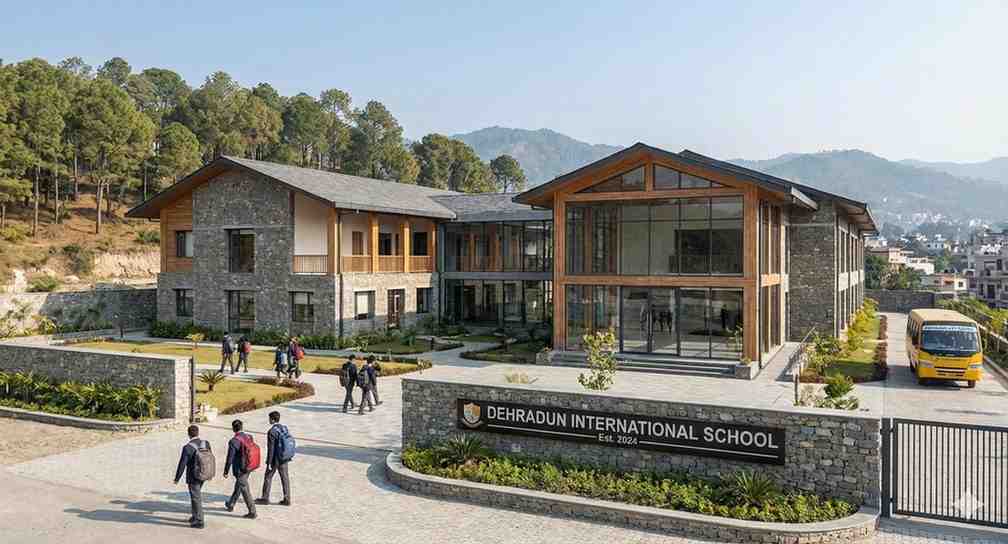
Can the ‘School Capital of India’ Adapt to the Demands of Modern Education?
Dehradun, 2025 — Long celebrated as the “School Capital of India”, Dehradun has historically been synonymous with premier legacy institutions and its rich tradition of academic excellence. However, in recent years, a noticeable shift has begun to reshape its educational identity. New schools like Doon Global Academy, Himalayan International School, and Scholars’ Edge Dehradun are steering education away from rigid, traditional models towards contemporary, technology-driven learning that reflects the city’s evolving role in an interconnected world.
Dehradun: A City of Heritage and Modernity
Nestled in the foothills of the Himalayas, Dehradun’s serene environment, pleasant weather, and colonial charm have long attracted students from across India and abroad. For decades, prestigious boarding schools like The Doon Schooland Welham Girls’ School defined the city’s reputation for elitist, disciplined education.
However, the changing demographics of the city — driven by migration, urbanization, and growing aspirations of its middle-class population — have ushered in a demand for progressive education. With its improved connectivity, economic expansion, and exposure to global trends, Dehradun is no longer a secluded hill station but a dynamic hub where traditional values meet modern aspirations.
Contemporary Learning for a Competitive World
While legacy institutions still enjoy prestige, new schools like Doon Global Academy have introduced educational frameworks that combine academic rigor with 21st-century skills. Interactive smart classrooms, robotics labs, AI-integrated learning tools, and interdisciplinary teaching are no longer novelties but standard offerings in these institutions.
Himalayan International School, for instance, has introduced “Global Learning Pods”, where students collaborate on projects with peers in international schools via virtual platforms. This shift contrasts sharply with traditional rote learning systems and aligns perfectly with the global exposure that Dehradun’s residents increasingly seek for their children.
Mr. Ajay Thakur, Principal of Scholars’ Edge Dehradun, shares: “Parents today want education to go beyond textbooks. They are looking for real-world skills like critical thinking, digital literacy, and creativity — and these schools are delivering on that promise.”
The Dehradun Exposure: A Tale of Two Worlds
Dehradun’s urban expansion and influx of industries have exposed its residents to opportunities once limited to metropolitan cities. While traditional schools continue to offer discipline and values rooted in history, newer institutions are bridging the gap between heritage and innovation.
In schools like Scholars’ Edge Dehradun, students are introduced to entrepreneurship bootcamps, coding marathons, and public speaking workshops alongside academic subjects. The city’s exposure to tourism, environmental industries, and defense services has created a unique blend of influences that inspires schools to prioritize skill-based, adaptable learning models.
Technology as a Catalyst
Modern schools are actively leveraging technology to enhance the quality of education and engagement. Smart boards, AI-driven progress trackers, and virtual simulations are creating interactive classrooms. This shift caters to the tech-savvy generation of students who learn best when education is immersive and dynamic.
Himalayan International School has implemented virtual reality-based history and geography lessons, offering students a chance to “walk” through ancient civilizations or explore global landscapes. Such innovations contrast starkly with the traditional classroom models still prevalent in many older institutions.
Balancing Tradition and Progress
What sets Dehradun apart is its ability to strike a balance between its storied educational legacy and the need for modern, forward-thinking schools. While institutions like The Doon School retain their place as prestigious academic icons, new schools are offering alternatives that are more affordable, technologically advanced, and tailored for the future.
Conclusion
Dehradun’s emergence as a hub for contemporary education reflects its transformation from a city of colonial-era schools to a progressive learning epicenter. Institutions like Doon Global Academy, Himalayan International School, and Scholars’ Edge Dehradun are redefining education for a generation that demands flexibility, innovation, and global exposure.
In a city that once symbolized academic heritage, these modern schools are proving that Dehradun can adapt, evolve, and lead — not just preserve — India’s educational future.
Leave a Reply