
A Promise of Equity or a Game of Power?
Land reforms in Uttar Pradesh, a state with a vast agricultural base and a rapidly urbanizing population, are a critical issue for millions of its residents. From redistribution initiatives to land acquisition for infrastructure projects, the state’s policies promise progress and equity. Yet, these reforms have sparked controversies, raising questions about their implementation, beneficiaries, and long-term impact. Are these reforms truly empowering marginalized communities, or are they disproportionately favoring the powerful?
The Landscape of Land Reforms in Uttar Pradesh
Key Facts (2023-24):
- Landless Population: Over 15% of rural households in Uttar Pradesh are landless, relying on tenant farming or daily labor.
- Land Consolidation (Chakbandi): The state continues its decades-old policy of land consolidation to streamline agricultural holdings.
- Land Acquisitions for Development: Large-scale projects like the Ganga Expressway and Jewar International Airport have led to the acquisition of thousands of hectares of farmland.
- Digital Land Records: Initiatives under Digital India Land Records Modernization Programme (DILRMP)aim to digitize land records, with 85% of records updated as of 2023.
Promises of Land Reforms
1. Redistribution for Equity
Land redistribution initiatives aim to allocate surplus land to marginalized communities, including Dalits, OBCs, and landless farmers. Schemes like the Bhoodan Movement of the past laid the foundation for equitable land ownership.
2. Modernizing Land Records
Digitization of land records under DILRMP is expected to reduce land disputes, increase transparency, and facilitate smoother transactions.
3. Boosting Infrastructure Development
Land acquisitions for expressways, airports, and industrial corridors promise economic growth, job creation, and improved connectivity for the state’s burgeoning population.
4. Encouraging Agribusiness
Consolidation of fragmented land holdings through chakbandi aims to make agriculture more efficient and open opportunities for agribusiness ventures.
Controversies and Challenges
1. Displacement and Compensation Issues
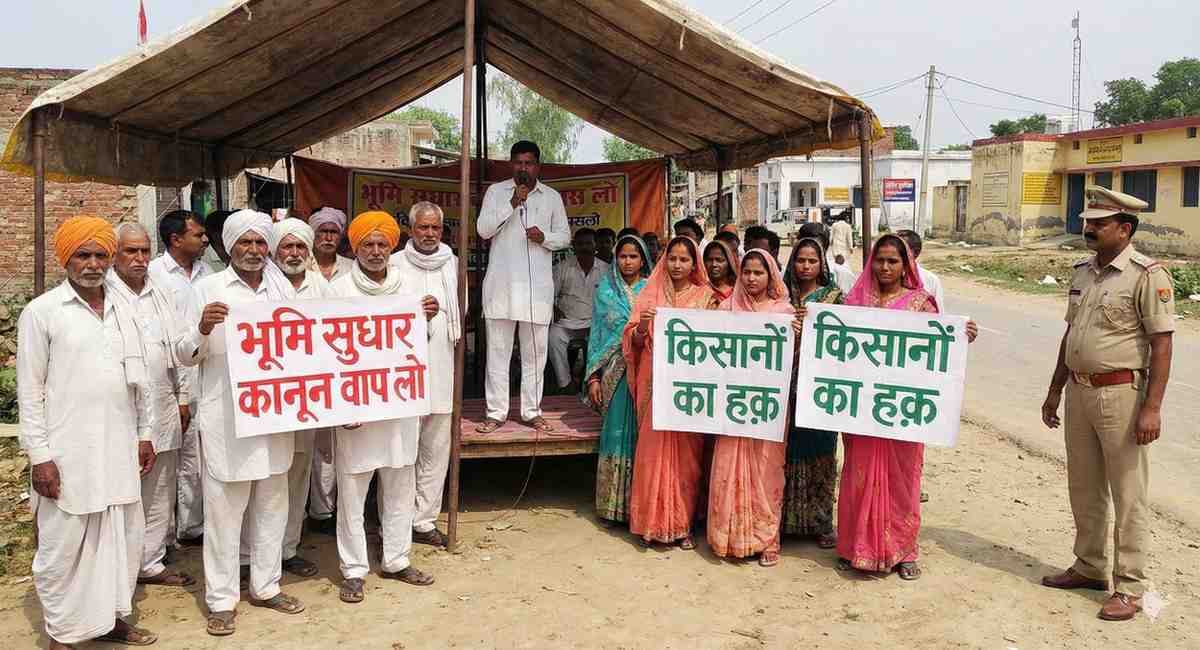
Land acquisition for development projects often leads to the displacement of farmers and tribal communities.
- Concerns:
- Inadequate compensation for acquired land.
- Lack of proper resettlement and rehabilitation for affected families.
- Example: Protests over land acquisition for the Jewar International Airport highlighted gaps in addressing farmers’ grievances.
2. Unequal Distribution
While redistribution programs aim to empower marginalized communities, reports suggest that influential individuals often corner benefits through political connections and bureaucratic loopholes.
3. Persisting Land Disputes
Despite digitization efforts, disputes over land ownership remain rampant, particularly in rural areas where boundaries and records are often unclear.
- Key Metric: Uttar Pradesh accounts for over 30% of India’s pending land-related court cases.
4. Urbanization at the Cost of Agriculture
The conversion of fertile agricultural land for urban projects and industrial zones has sparked debates about food security and sustainability.
5. Exclusion of Women
Despite legal provisions, women’s land ownership remains low, with cultural norms often depriving them of their rightful inheritance.
Who Really Benefits?
1. Developers and Corporations
Large-scale land acquisitions for infrastructure and industrial projects primarily benefit developers and private corporations, often sidelining the interests of local communities.
2. Urban Elites
Urbanization drives up land prices, benefiting wealthy investors and landowners in cities, while rural landholders receive disproportionately low compensation.
3. Marginalized Communities (Mixed Results)
While land redistribution has benefited some Dalit and landless families, implementation inefficiencies and favoritism dilute its impact, leaving many still struggling for ownership.
4. Middlemen and Bureaucrats
The process of land transactions, acquisitions, and consolidations often creates opportunities for corruption, with middlemen and officials profiting at the expense of rightful beneficiaries.
Recommendations for Equitable Land Reforms
1. Fair Compensation and Rehabilitation
- Ensure timely and adequate compensation for land acquired under development projects.
- Introduce comprehensive resettlement programs, including skill development and employment opportunities for displaced families.
2. Transparency in Land Records
- Accelerate digitization and ensure public access to updated land records.
- Introduce blockchain technology to prevent tampering and ensure the integrity of land ownership data.
3. Strengthen Redistribution Programs
- Regularly audit land redistribution programs to ensure that marginalized communities are the primary beneficiaries.
- Simplify procedures to make land allocation accessible to landless families.
4. Protect Agricultural Land
- Limit the conversion of fertile agricultural land for non-agricultural purposes by prioritizing barren and unused lands for industrial and urban projects.
- Encourage sustainable urban planning to balance development and agriculture.
5. Empower Women
- Promote awareness campaigns and legal reforms to ensure women’s equal rights to inherit and own land.
- Provide financial incentives for families that register land in the names of female members.
Conclusion: Progress or Polarization?
Uttar Pradesh’s land reforms hold the promise of creating a more equitable and prosperous state. While significant strides have been made in modernizing records and encouraging development, the benefits often appear skewed toward the powerful, leaving marginalized communities with limited gains.
The real test of these reforms lies in their inclusivity and implementation. Will Uttar Pradesh transform its land policies into tools of empowerment for the many, or will they remain a privilege for the few? The answer will shape the social and economic fabric of the state for years to come.
Leave a Reply