
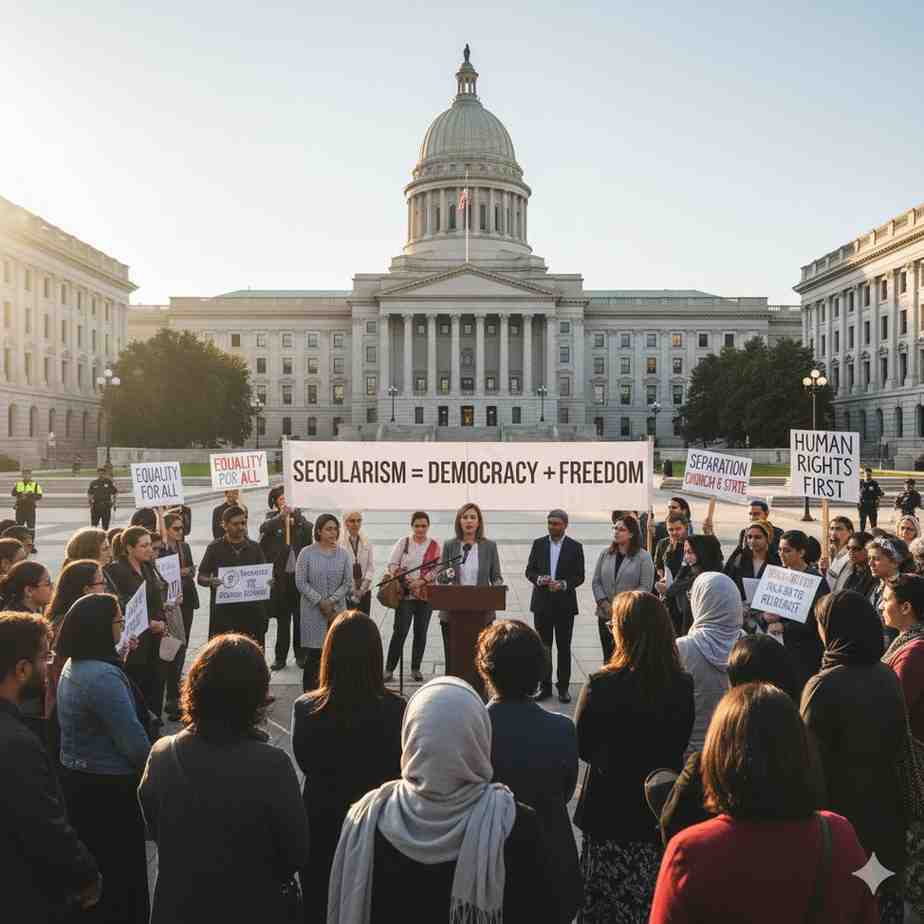
New Delhi – Secularism, the cornerstone of India’s constitutional ethos, is integral to preserving and promoting the country’s democratic values. In a nation marked by its extraordinary religious diversity, secularism acts as the balancing force, ensuring that the state remains neutral in matters of faith and upholds the rights of every individual. Yet, in recent years, the principle of secularism has come under strain, raising concerns about its role in safeguarding democracy in a pluralistic society.
What Is Secularism?
Secularism, as enshrined in India’s Constitution, is the principle that the state does not favor or discriminate against any religion. Unlike the Western model of secularism, which advocates complete separation of religion and state, India’s approach—termed “positive secularism”—recognizes religion as a significant part of public life while maintaining the state’s impartiality.
Secularism: The Bedrock of Democracy
Secularism is vital for ensuring equality, freedom, and justice—three fundamental pillars of democracy.
- Promoting Religious Freedom
- Article 25 of the Constitution guarantees every citizen the right to freely profess, practice, and propagate their religion, fostering an environment where diverse faiths can coexist peacefully.
- Secularism ensures that no community feels excluded or marginalized, promoting a sense of belonging among all citizens.
- Preventing Majoritarianism
- In a democracy as populous as India, secularism acts as a safeguard against the dominance of any one religious group. It ensures that the rights of minorities are protected, preventing social and political marginalization.
- Fostering Social Harmony
- By emphasizing equality before the law irrespective of religious affiliations, secularism reduces the potential for communal conflicts and encourages national unity.
Challenges to Secularism in Modern India
Despite its importance, the principle of secularism faces growing challenges in India today.
- Political Exploitation of Religion
- The increasing use of religious rhetoric in politics threatens to undermine the secular fabric of the nation. According to a 2023 Association for Democratic Reforms (ADR) report, nearly 40% of election campaigns prominently featured religious appeals, raising concerns about polarization.
- Controversial issues, such as the construction of religious monuments and bans on religious practices, have further deepened divisions.
- Judicial Interventions in Religious Matters
- While the judiciary has upheld secular principles in landmark rulings, such as the Triple Talaq case and the Sabarimala Temple verdict, these decisions have also sparked debates over the state’s role in religious reforms.
- Rise in Communal Incidents
- Data from the National Crime Records Bureau (NCRB) revealed a 22% increase in communal violence cases in 2022 compared to the previous year, highlighting the fragility of India’s secular harmony.
Strengthening Secularism: A Collective Responsibility
Preserving secularism in India requires concerted efforts from all sections of society.
- Education and Awareness
- Introducing secular values in school curricula can foster tolerance and understanding from a young age, helping the next generation appreciate the importance of religious neutrality.
- Community programs that encourage interfaith dialogue can bridge gaps and dispel myths, fostering harmony.
- Political Accountability
- Political parties must be held accountable for upholding the secular ethos. The Election Commission of India must enforce stricter guidelines to curb the misuse of religion during campaigns.
- Judicial Vigilance
- The judiciary must continue to act as a guardian of secular principles, ensuring that laws and policies align with the Constitution’s vision.
Conclusion
Secularism is not just a constitutional mandate—it is the essence of India’s democracy. It ensures that every citizen, regardless of their faith, is treated with dignity and equality.
As India moves forward, reaffirming its commitment to secularism will be essential for fostering unity and safeguarding its democratic values. The choice lies with its people: Will they uphold the principle that celebrates diversity, or risk eroding the very foundation of their democracy?
Leave a Reply