
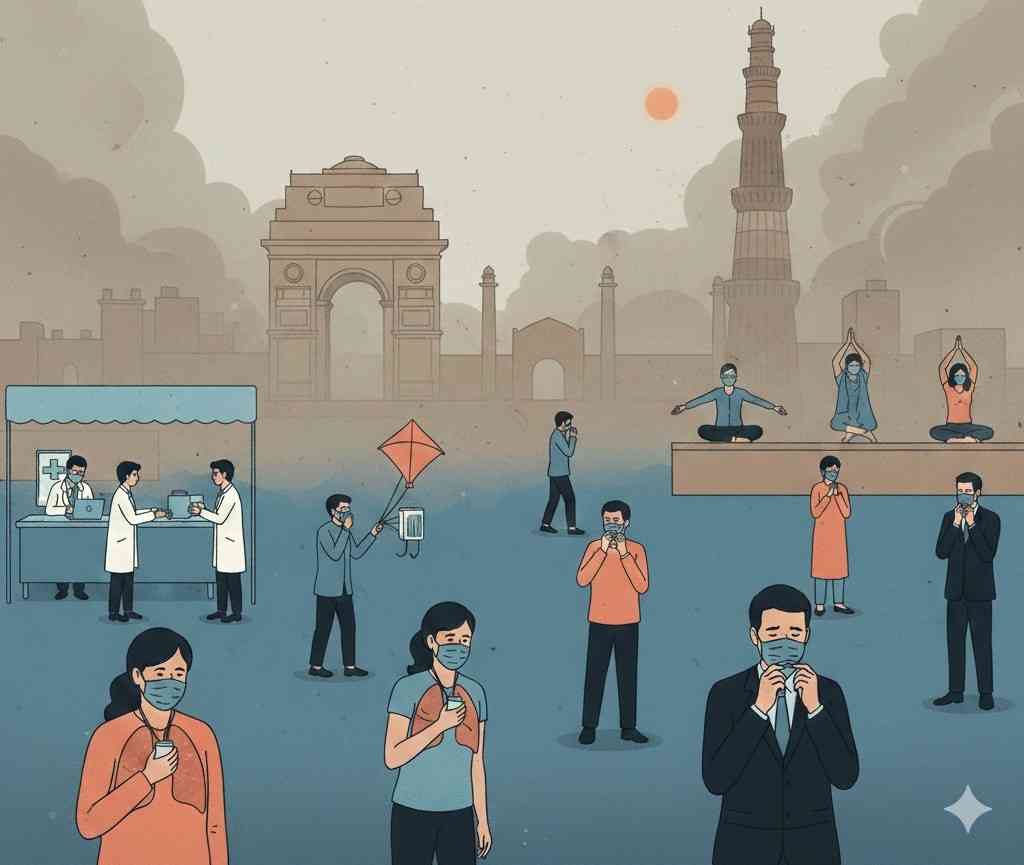
Key highlights
- Winter makes pollution feel worse because the atmosphere often traps it closer to the ground; GRAP frameworks exist exactly for this seasonal risk. CAQM+1
- Respiratory stress rises from a mix of outdoor pollution + indoor exposure + infections, not one villain.
- Official health advisories focus on reducing exposure and protecting high-risk groups. National Centre for Disease Control
Delhi’s winter health problem isn’t just “bad air.” It’s bad air + winter physiology + crowded indoor life—a combo that turns minor irritation into real clinical load.
Why winter amplifies breathing problems
1) The “lid” effect
Cold nights and low wind can trap pollutants near the surface. The same emissions feel more intense because dispersion is weaker.
2) Fog and pollution mix
Fog doesn’t create pollution—but it can coincide with conditions that keep pollutants suspended longer, worsening discomfort and visibility.
3) Indoor exposure quietly rises
People seal windows, use heaters, and spend more time inside. Indoor smoke, dust, and poor ventilation can compound lung stress.
GRAP: what it signals (in plain terms)
GRAP is essentially the “escalation ladder” for Delhi-NCR air quality, with staged actions linked to AQI bands. CAQM’s revised GRAP schedule and CPCB winter action frameworks show how authorities plan to respond as air quality deteriorates. CAQM+1
Who is most at risk
Official public health guidance highlights higher vulnerability for:
- children
- elderly
- people with asthma/COPD/heart disease
- outdoor workers
Health advisories from national bodies stress exposure reduction and protective behaviour during high pollution episodes. National Centre for Disease Control
What you can do that actually helps
- Track AQI and plan outdoor time when it’s lower (midday often feels better than early morning)
- Improve indoor ventilation smartly (short bursts when outdoor air is better)
- If you have asthma/COPD: keep medicines accessible and don’t “wait it out”
Small questions people search
Why do symptoms feel worse at night and early morning?
Because colder, calmer air often traps pollutants, and respiratory airways can be more reactive in cold conditions.
Leave a Reply