
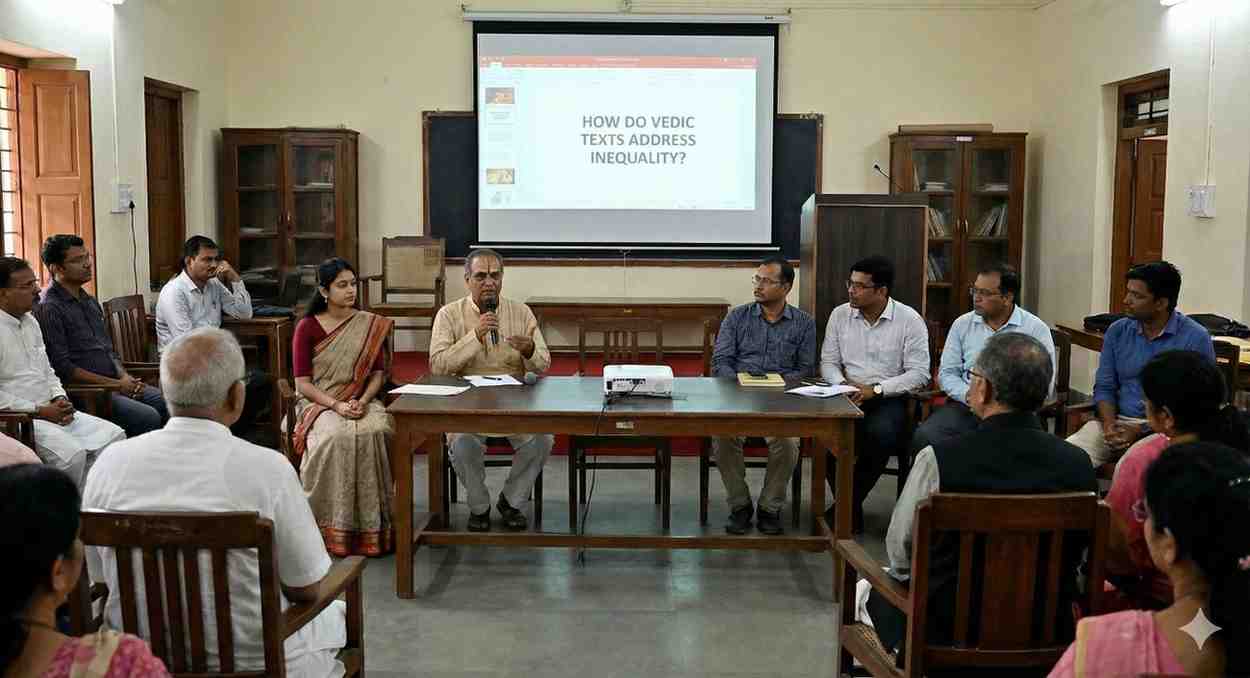
“Harmony and Balance: Exploring Social Justice Through the Lens of Vedic Philosophy”
Vedic teachings, often associated with spirituality and metaphysics, also contain profound insights on ethical governance, human rights, and societal balance. At their core, the Vedas emphasize rita (cosmic order) and dharma(righteousness), which extend beyond individual morality to encompass social justice. While the texts were written in a historical context vastly different from today’s world, their principles offer timeless guidance for addressing modern social challenges.
Foundational Concepts of Justice in the Vedas
- Rita: Cosmic Order and Social Harmony
- The Rigveda introduces the concept of rita, the universal law of order and balance. In a social context, ritareflects the need for fairness, equity, and harmony among individuals and communities. It promotes the idea that justice is integral to maintaining societal stability and prosperity.
- Dharma: Righteous Duty for All
- Dharma, central to Vedic philosophy, defines the moral and ethical duties of individuals within a society. Unlike rigid interpretations seen in later eras, the Vedic understanding of dharma is fluid and adaptable, emphasizing fairness, compassion, and collective welfare.
Social Justice Principles in Vedic Texts
- Equality and Inclusivity:
- While later interpretations of Vedic texts contributed to societal hierarchies, the original Vedas emphasized a more inclusive ethos. Hymns in the Rigveda highlight the unity of all beings, declaring, “The earth is our mother; we are all her children.” This universality underscores the inherent equality of all life.
- Dignity of Labor:
- The Vedic age recognized the dignity of diverse roles within society. The varna system, originally based on occupational functions, aimed to create interdependence and harmony among different groups. While later rigidification led to caste-based discrimination, the Vedic intention was rooted in cooperation and mutual respect.
- Justice and Governance:
- The Atharvaveda discusses the role of kings and rulers, emphasizing that they must govern with fairness, impartiality, and compassion. A just ruler, according to Vedic teachings, is one who ensures the welfare of all citizens, particularly the vulnerable.
Application to Contemporary Issues
- Gender Equality:
- The Vedas celebrate the strength and wisdom of women, with figures like Gargi and Maitreyi participating in philosophical debates. The texts also acknowledge women’s roles in rituals and society, promoting a vision of gender balance that can inspire modern movements for equality.
- Environmental Justice:
- Vedic reverence for nature extends to a commitment to sustainability and shared resources. The concept of rita aligns with modern ecological ethics, advocating for equitable resource distribution and environmental stewardship.
- Economic Equity:
- Vedic teachings on generosity (dana) and the redistribution of wealth emphasize community welfare. They stress that material prosperity should be shared to ensure that no one in society is left behind.
Challenges and Reinterpretations
While the Vedas provide foundational principles for justice, their societal context differs significantly from today’s democratic frameworks. Critics argue that some practices rooted in later interpretations of Vedic ideas, such as caste discrimination, contradict the inclusive spirit of the original texts.
To apply Vedic teachings to modern issues, it is essential to reinterpret their core values—compassion, fairness, and balance—while discarding outdated societal norms.
Conclusion
Vedic teachings address social justice not as an abstract ideal but as a practical necessity for harmony and order. Through concepts like rita and dharma, they emphasize fairness, equity, and collective well-being.
As modern societies grapple with inequality, environmental crises, and human rights issues, the Vedic vision of justice offers timeless guidance. By reexamining these ancient texts with a focus on their philosophical essence, we can draw lessons to build a more just and inclusive world.
Leave a Reply