
Key highlights
- NSO price collection covers 1181 villages and 1114 urban markets via field visits. Press Information Bureau
- For Oct 2025, prices were collected from 100% villages and 98.29% urban markets; market-wise reporting was 88.53% rural and 92.17% urban. Press Information Bureau
- CPI is not magic—it is logistics, response rates, and systematic field work. Press Information Bureau+1
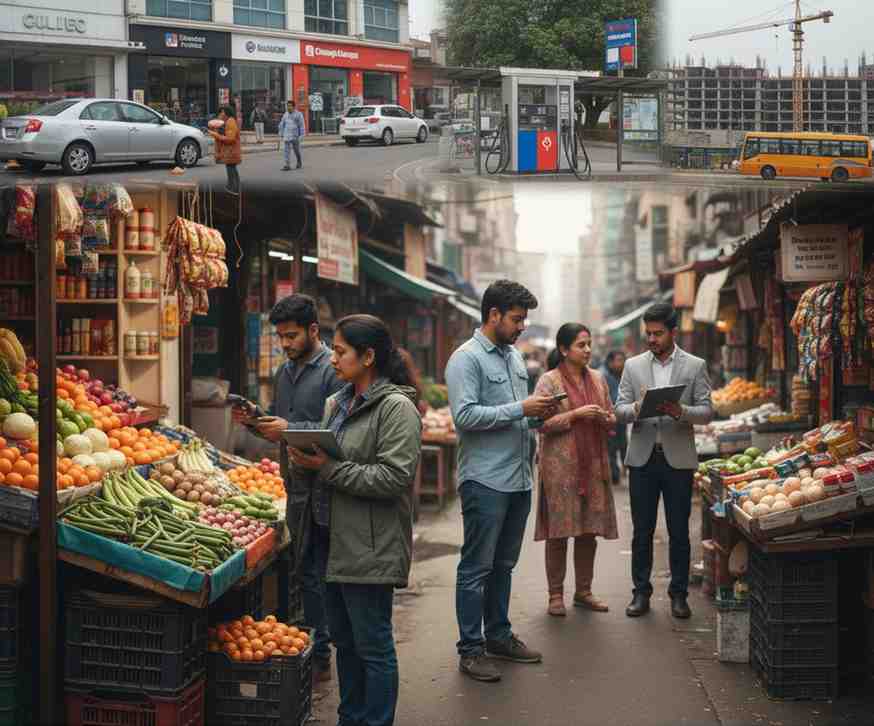
Trust in inflation data isn’t built by saying “official.” It’s built by showing the machinery behind the number. One of the most underused pieces of CPI communication is the operational detail on how price collection actually happens. The official note explains that NSO collects price data from a defined network: 1181 villages and 1114 urban markets, spanning States/UTs, through personal visits on a weekly roster. Press Information Bureau
This matters because CPI is vulnerable to casual cynicism. People assume indices are “adjusted” or “managed.” The field reality is more mundane—and more credible: a large-scale routine of collection, reporting, validation, and compilation. The same note also provides a response picture for October 2025: price collection from 100% villages and 98.29% urban markets, with market-wise prices reported at 88.53% for rural and 92.17% for urban. Press Information BureauThat transparency is important: it admits operational constraints while still showing the breadth of coverage.
For a January 2026 explainer, these details are gold. They allow you to write a trust-building story without becoming defensive: CPI is not a vague estimate; it’s a field system. And like any field system, it has response rates, gaps, and methodology—none of which invalidate it, but all of which should inform interpretation.
A smart editorial stance is simple: respect the number, but understand its construction. When readers learn how CPI is collected, they stop treating it like propaganda and start treating it like what it is—a structured measurement of a complex country.
Leave a Reply