
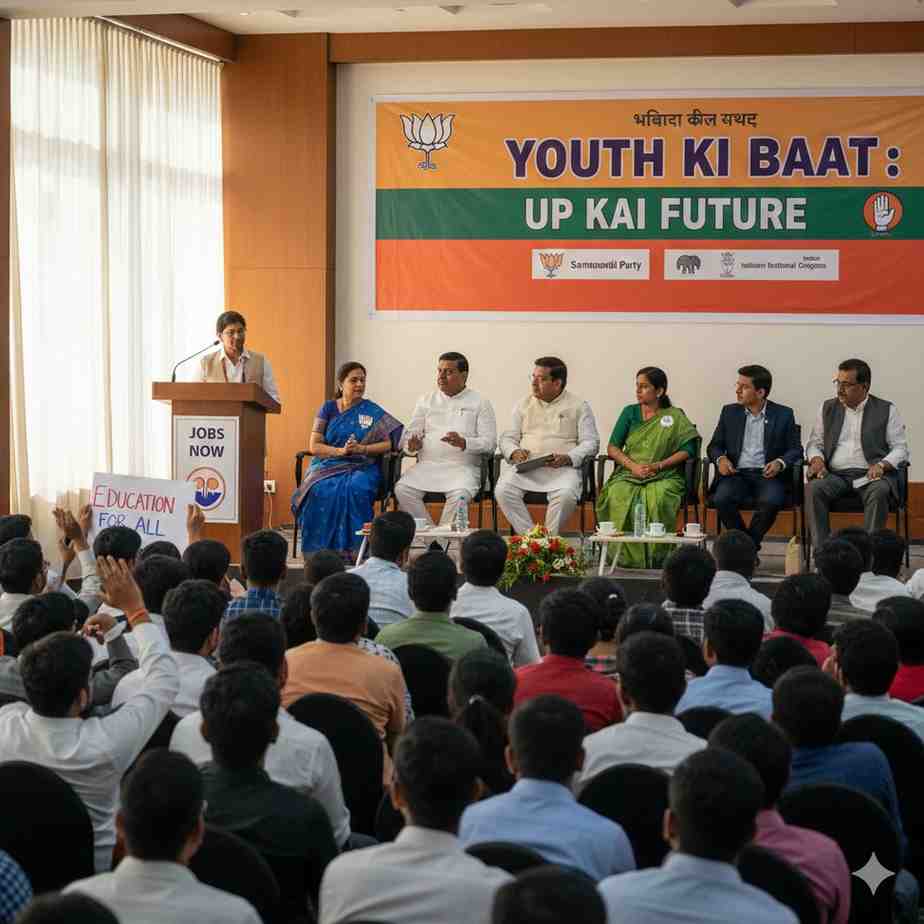
The Youth of Uttar Pradesh: A Silent Majority or Emerging Force?
With over 30% of Uttar Pradesh’s population aged between 15 and 34, the state is brimming with youthful energy and potential. The youth represent not just voters but a vital demographic capable of influencing policies, driving innovation, and shaping the state’s future. However, their voices often seem overshadowed by traditional vote bank politics. Are political parties genuinely addressing their concerns, or are they merely paying lip service to this pivotal group?
Key Metrics
- Youth Population: Over 65 million people aged 15–34 reside in UP (Census 2011).
- Youth Unemployment Rate: Approximately 12% of individuals aged 18–24 are unemployed (Periodic Labour Force Survey, 2023).
- Education Enrollment: UP’s gross enrollment ratio for higher education stands at 27.3%, below the national average (All India Survey on Higher Education, 2022).
- Youth Participation in Elections: Less than 30% of eligible youth are actively engaged in the electoral process (Election Commission of India).
What Do UP’s Youth Demand?
1. Employment Opportunities
Unemployment is the most pressing issue for UP’s youth. While political parties often promise job creation through industrial corridors and skill development programs, the ground reality tells a different story.
- Reality Check: Many industrial zones in the state operate below capacity, and job creation programs often fail to reach rural and semi-urban areas.
2. Quality Education
Access to affordable, high-quality education remains a challenge, particularly in rural regions.
- Youth Speak: Students demand improvements in public education infrastructure and higher education opportunities closer to home.
3. Digital Access and Connectivity
In a digital-first world, young voters seek better internet access and technology-driven solutions for governance and education.
- Reality Check: Rural areas continue to face challenges in accessing reliable digital infrastructure.
4. Platforms for Political Engagement
Youth in UP are eager for platforms that allow them to voice their opinions and influence policy. However, traditional political structures often limit their participation.
How Are Political Parties Responding?
1. Social Media Campaigns
Political parties have turned to social media platforms to connect with young voters, using hashtags, memes, and interactive sessions.
- Example: BJP’s #DeshKiMitti campaign targeted young professionals, while SP used Instagram reels to engage college students.
- Impact: While these campaigns create visibility, they often fail to address deeper, policy-driven concerns.
2. Youth Wings
Organizations like the Bharatiya Janata Yuva Morcha (BJYM) and Samajwadi Yuvjan Sabha aim to involve young people in politics.
- Reality: These wings often function as extensions of senior leadership rather than independent platforms for youth representation.
3. Skill Development Programs
Initiatives like Skill India and One District, One Product (ODOP) are designed to create jobs and entrepreneurial opportunities for young people.
- Impact: While these programs show promise, their implementation often lacks the scale needed to make a significant impact.
4. Education Reforms
The government has announced schemes to improve education quality and access, such as new universities and digital classrooms.
- Reality Check: Progress is slow, and rural areas remain underserved.
Challenges to Listening to Youth Voices
1. Urban-Rural Divide
Most political outreach efforts are concentrated in urban areas, leaving rural youth feeling disconnected from the political process.
2. Short-Term Focus
Election campaigns often focus on immediate gains rather than addressing the long-term aspirations of young people.
3. Lack of Representation
While youth wings exist, young leaders are rarely given significant decision-making roles within political parties.
The Way Forward
1. Engage Beyond Elections
Political parties must engage with young people consistently, not just during election cycles, through town halls, youth forums, and participatory platforms.
2. Address Core Issues
Prioritize policies that tackle unemployment, education disparities, and digital access in both urban and rural regions.
3. Foster Leadership
Empower young leaders by giving them roles in decision-making processes and encouraging grassroots leadership.
4. Invest in Digital Infrastructure
Expand access to reliable internet and technology-driven governance to bridge the rural-urban divide.
Conclusion: A Missed Opportunity or a Growing Force?
The youth of Uttar Pradesh are not just a demographic—they are a powerful force capable of driving change. While political parties have made strides in engaging this group through digital campaigns and youth-focused programs, much more needs to be done to address their core concerns.
To truly harness the potential of UP’s youth, political parties must listen, act, and empower. The state’s future depends on turning this vibrant energy into a driving force for progress and governance. Whether UP’s political landscape evolves to reflect the aspirations of its youth remains to be seen—but one thing is clear: ignoring them is no longer an option.
Leave a Reply