
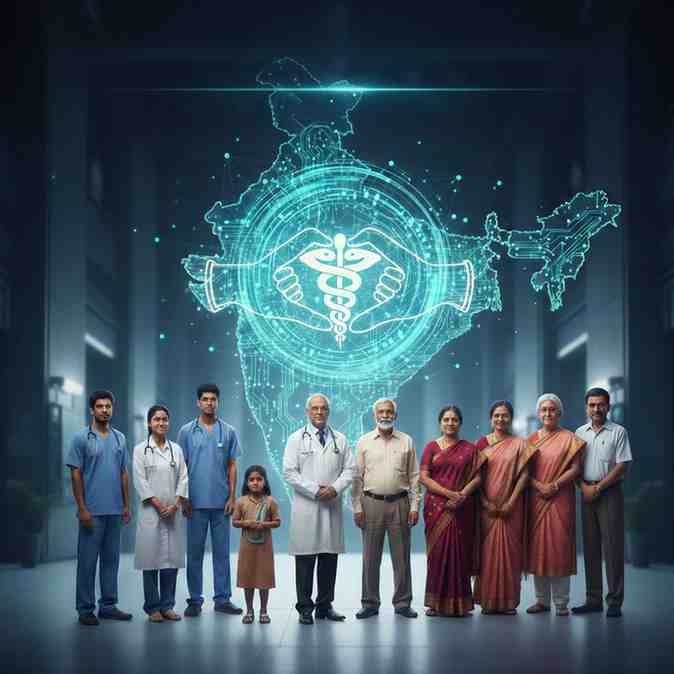
NEW DELHI – In a move to redefine the future of public health, the Government of India has unveiled a comprehensive roadmap for integrating Artificial Intelligence (AI) into the national healthcare framework. Under the banner of “AI for Humanity,” the initiative seeks to transition from traditional diagnostic methods to a tech-driven ecosystem that prioritizes affordability, precision, and universal reach.
Beyond Human Limits: The New Diagnostic Standard
The integration of frontier technologies is fundamentally altering how medical services and drugs are delivered. By leveraging AI, the government aims to enhance the quality of medical devices and streamline clinical decision support systems.
The impact is already visible in specialized care. In December 2025, India launched its first AI community screening program focused on diabetic retinopathy. By using AI-enabled grading of retinal photographs, the program has successfully screened and benefited over 7,000 diabetic patients, identifying risks far earlier than traditional manual check-ups would allow.
Telemedicine: Bridging the Rural-Urban Divide
One of the most significant achievements highlighted in the recent government briefing is the massive scale of AI-assisted remote care. Between April 2023 and November 2025, India recorded a staggering 282 million telemedicine consultations.
These were not merely video calls; 12 million of these patients received AI-recommended diagnoses. This technology acts as a force multiplier for doctors, allowing them to serve marginalized communities where medical specialists are often scarce. By automating preliminary screenings, AI ensures that geographical barriers no longer dictate the quality of healthcare a citizen receives.
The Vision of Viksit Bharat 2047
The push for AI is a central pillar of the “Viksit Bharat 2047” vision—a mission to transform India into a developed nation by its centenary of independence. The government views AI not just as a tool for efficiency, but as a moral imperative to promote inclusive socioeconomic development.
By fulfilling the commitment to universal health coverage, the “AI for Humanity” principle focuses on:
- Early Detection: Reducing the long-term burden of chronic diseases.
- Marginalized Outreach: Ensuring tribal and rural areas have the same diagnostic power as tier-1 cities.
- Affordability: Lowering the cost of medical services through automated precision.
Bottom Line
The era of “AI for Humanity” marks a shift from reactive to proactive healthcare. By integrating these innovative tools, India is moving toward a future where technology addresses critical human challenges directly, ensuring that the path to 2047 is paved with a healthier, more resilient population.
Leave a Reply