
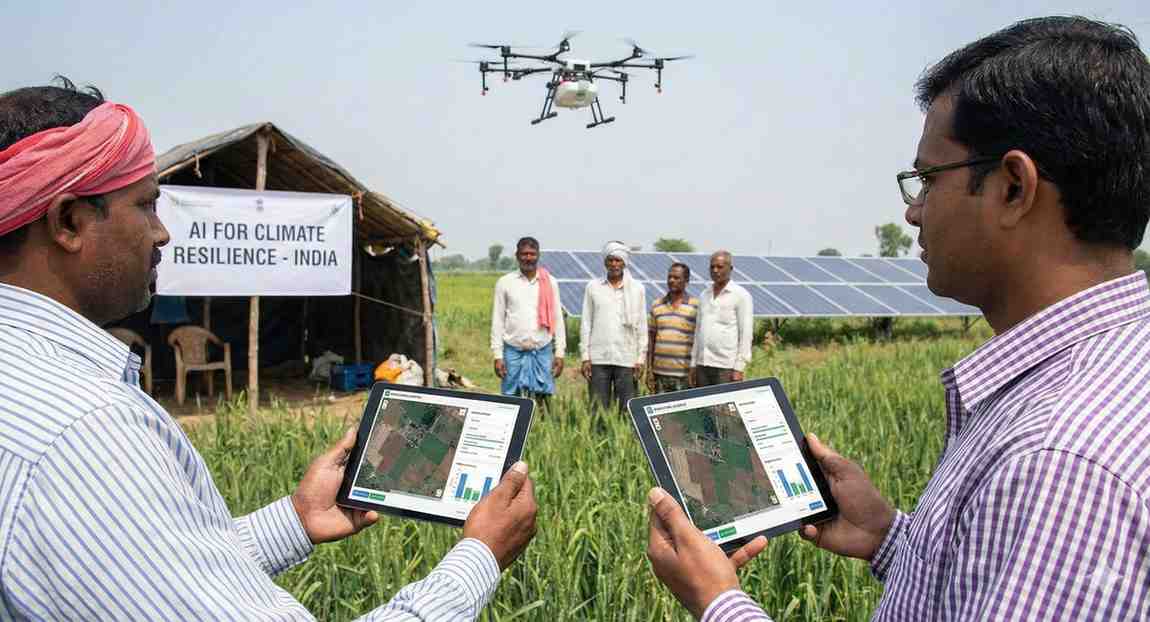
An examination of how India is utilizing artificial intelligence to address and mitigate the challenges posed by climate change across various sectors.
Key Highlights
- Climate Modeling and Prediction: Utilizing AI to enhance the accuracy of climate forecasts and impact simulations.
- Sustainable Agriculture: Deploying AI to optimize resource use and improve crop resilience against changing climate conditions.
- Energy Efficiency: Implementing AI to boost the efficiency of renewable energy systems and manage energy consumption.
- Environmental Monitoring: Using AI to monitor biodiversity and pollution levels, supporting conservation and regulatory efforts.
1. Climate Modeling and Prediction
AI is revolutionizing climate science in India by providing advanced tools for modeling and predicting climate patterns. These technologies process vast amounts of environmental data to forecast weather extremes and their potential impacts, aiding in preparation and mitigation strategies.
Technological Applications:
- Development of AI-driven models that predict monsoon patterns and rainfall distribution, crucial for agricultural planning and water resource management.
- AI systems that simulate various climate scenarios to help policymakers understand potential future environments under different global warming trajectories.
2. Sustainable Agriculture
In response to the threat of climate change on agriculture, AI is being employed to create more sustainable farming practices. These include precision agriculture techniques that optimize water usage, fertilizer application, and pest control, all tailored to the specific needs of crops while minimizing environmental impact.
Implementation Details:
- Use of drone and satellite imagery, analyzed by AI, to monitor crop health and soil moisture levels, enabling targeted interventions that conserve resources and enhance yield resilience against climate variability.
3. Energy Efficiency
AI contributes significantly to enhancing energy efficiency, particularly in the renewable energy sector. By predicting energy demands and optimizing the output of renewable sources, AI helps balance supply and demand, reducing reliance on fossil fuels and supporting India’s commitments to reduce greenhouse gas emissions.
Efficiency Enhancements:
- AI algorithms that manage smart grids, optimizing the distribution and storage of solar and wind energy.
- Predictive maintenance tools for renewable energy equipment, reducing downtime and increasing overall efficiency.
4. Environmental Monitoring
AI technologies are pivotal in monitoring environmental health, assessing pollution levels, and tracking biodiversity changes. This data is crucial for enforcing environmental regulations and undertaking conservation efforts effectively.
Monitoring and Conservation Efforts:
- AI-powered systems to continuously monitor air and water quality across various regions, providing real-time data that informs pollution control measures.
- Use of AI in wildlife conservation projects, such as analyzing camera trap images to track animal populations and detect poaching activities.
Challenges and Opportunities
While AI offers transformative potential for climate action, challenges such as data accuracy, model bias, and high implementation costs must be addressed. Ensuring equitable access to AI technologies and fostering international cooperation are also essential for maximizing the benefits of AI in climate change mitigation.
Conclusion
India’s strategic use of AI in combating climate change illustrates a proactive and innovative approach to environmental stewardship. As AI technologies continue to advance, their integration into climate action plans will be crucial in adapting to and mitigating the impacts of climate change, ensuring a sustainable future for the coming generations.
Leave a Reply