
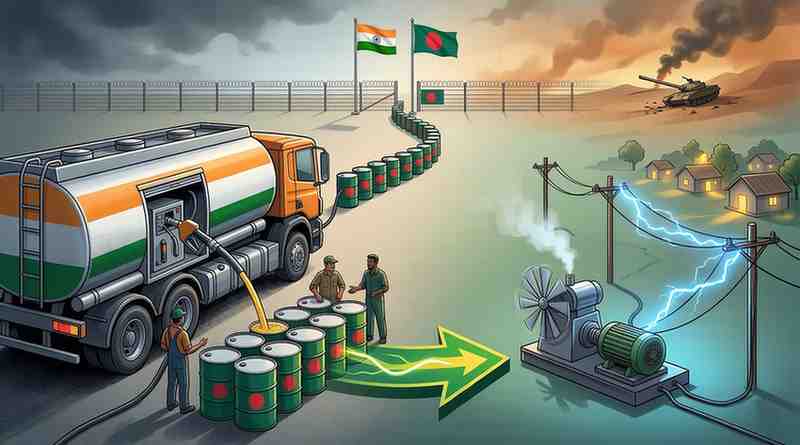
New Delhi, March 11, 2026 — As the conflict in West Asia intensifies, the ripple effects are being felt acutely across South Asia. In a significant move of regional energy diplomacy, India has begun supplying emergency diesel to Bangladesh through a cross-border pipeline to mitigate a crippling fuel shortage triggered by the Iran war.
While global supply chains fracture under the weight of naval mines and blockades, the 131-km India-Bangladesh Friendship Pipeline has emerged as a vital security asset for a region under duress.
The Lifeline: 5,000 Tons through the Friendship Pipeline
New Delhi has dispatched approximately 5,000 tons of diesel from its Numaligarh refinery in Assam directly to Bangladesh’s power and transport sectors. This emergency shipment falls under a pre-existing commercial agreement that typically sees India supplying 180,000 tons of diesel annually.
However, with the war disrupting nearly 20% of global oil shipments typically passing through the Strait of Hormuz, Dhaka has officially requested additional volumes beyond the agreed limits. Indian officials are currently assessing market conditions and local availability before committing to these extra supplies.
Bangladesh Under Strain: Universities Closed, Fuel Rationed
The shortage has forced the Bangladeshi government into crisis mode. Emergency measures currently in place include:
- Educational Shutdowns: Public and private universities across the country have been temporarily closed to reduce energy consumption.
- Strict Rationing: Authorities have introduced daily limits on fuel sales to curb panic buying at petrol pumps.
- Economic Squeeze: As a country heavily reliant on imported gas for its electricity grid, even minor supply disruptions are threatening to stall industrial growth.
The Shadow of Hormuz: A Global Choke Point
The crisis is driven by escalating tensions in the Gulf, where the United States has reportedly destroyed Iranian vessels accused of laying naval mines. Tehran’s threats to block oil exports have sent shockwaves through energy markets.
Even in India, the impact is visible; commercial LPG shortages are currently forcing hotels and restaurants in several cities to consider cutting menus or shutting kitchens entirely due to tightened supply chains from the Gulf.
Bottom Line
India’s decision to prioritize diesel shipments to its neighbor highlights a shift toward regional energy cooperation as a buffer against global geopolitical shocks. While the “Friendship Pipeline” provides a temporary bridge, the stability of South Asia’s energy security remains tethered to the volatile waters of the Strait of Hormuz.
Leave a Reply