
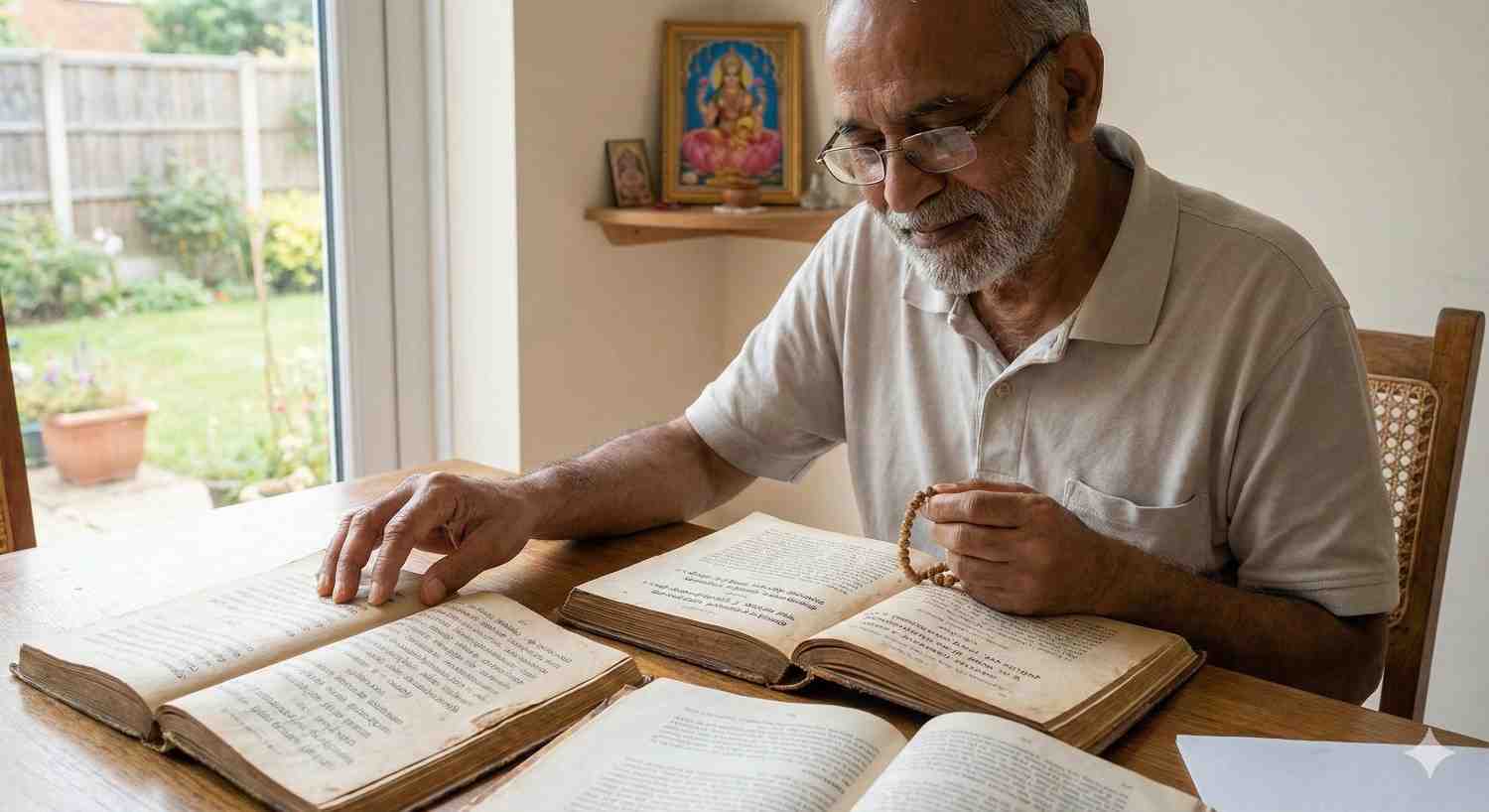
“Faith as the Lens: Unraveling the Depth of Vedic Teachings Through Inner Belief”
Vedic wisdom, with its intricate hymns and profound philosophical tenets, is a treasure trove of insights into the mysteries of existence, the universe, and the self. Yet, to engage with these ancient texts, one requires more than intellectual curiosity—faith becomes an essential lens. Faith, in this context, is not blind acceptance but an open-minded trust in the transformative potential of the teachings. Without it, the depth of Vedic wisdom may remain elusive, lost amidst skepticism and modern distractions.
Faith as the Gateway to Exploration
The Vedas are not prescriptive manuals but suggestive guides, pointing seekers toward self-discovery. They challenge the individual to explore profound questions: Who am I? What is the nature of reality? What connects the individual to the cosmos? To engage with such questions, faith acts as the initial step, the willingness to trust in the process even when the answers seem distant or abstract.
Faith in Vedic wisdom is not about surrendering reason but about creating a balance between rational inquiry and intuitive belief. The texts themselves encourage this interplay. For instance, the Nasadiya Sukta (Hymn of Creation) in the Rigveda openly questions the origins of the universe, ending with the enigmatic assertion that even the gods might not know the ultimate truth. This blend of inquiry and humility invites seekers to approach Vedic teachings with a heart open to both questions and possibilities.
Faith as an Anchor Amidst Complexity
The Vedas often express their truths through layered symbolism, metaphors, and chants. Faith serves as the anchor that allows one to navigate this complexity without becoming overwhelmed or dismissive. For example:
- The Vedic fire (Agni) is not just a ritualistic element but a profound symbol of transformation, representing both the physical fire and the inner fire of knowledge and spiritual awakening. Faith helps the seeker trust that deeper meanings lie beneath the surface of rituals.
Similarly, mantras like Om carry vibrational power that can only be experienced through faith-filled repetition. Without the trust that these practices hold intrinsic value, their transformative potential remains untapped.
Faith as a Path to Experience
Vedic wisdom emphasizes experiential understanding over theoretical knowledge. The Upanishads, extensions of the Vedas, underscore the importance of direct realization of the self (Atman) and its unity with the universal consciousness (Brahman). This realization often defies logic and requires an inner leap—a faith-driven trust in practices like meditation, self-inquiry, and chanting.
Faith allows individuals to step into the unknown, to embrace practices that might initially feel unfamiliar or intangible. It creates the space for growth, transformation, and ultimately, transcendence.
The Dangers of Blind Faith
While faith is vital, blind faith—unquestioning adherence without reflection—can be counterproductive. The Vedas themselves caution against dogma, urging seekers to question, reason, and understand. Faith in Vedic wisdom must be dynamic, allowing room for growth, exploration, and reinterpretation.
Conclusion
Faith plays a dual role in understanding Vedic wisdom—it is both the starting point and the sustaining force that carries seekers through the journey. It bridges the gap between intellectual understanding and spiritual experience, creating a dynamic interplay between trust, inquiry, and realization.
In a world increasingly dominated by skepticism and the need for immediate answers, faith in the timeless teachings of the Vedas invites us to slow down, reflect, and trust the process of inner discovery. It is not about abandoning reason but about opening oneself to the profound truths that lie beyond it—a journey that requires both courage and faith.
Leave a Reply