
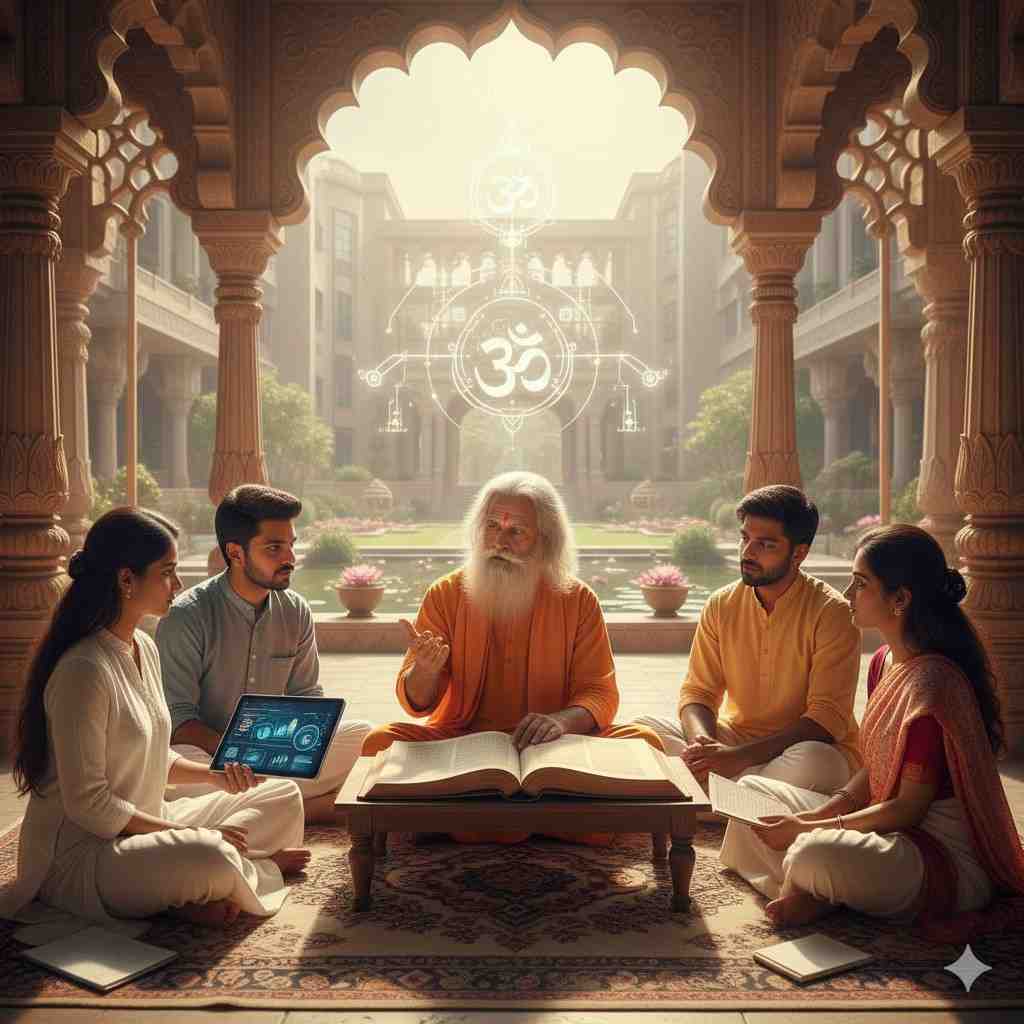
“Balancing Reason and Faith: Vedic Wisdom for Modern Seekers”
The Vedas, ancient texts forming the bedrock of Hindu philosophy, offer a profound synthesis of knowledge (Jnana) and belief (Shraddha). Far from presenting these as opposing forces, the Vedas reveal that true wisdom arises when reason and faith work in harmony. This balance is not just an intellectual pursuit but a pathway to deeper understanding and fulfillment, making Vedic insights profoundly relevant in today’s polarized world.
Knowledge (Jnana): The Pursuit of Truth
Vedic philosophy places great emphasis on knowledge as a tool for self-realization. It encourages questioning, inquiry, and intellectual exploration. The Upanishads, philosophical extensions of the Vedas, delve into profound concepts such as the unity of the self (Atman) with the ultimate reality (Brahman). Statements like “Tat Tvam Asi” (You are That) underscore the transformative power of understanding the interconnectedness of existence.
This pursuit of truth is not confined to metaphysics but extends to the natural world. The Vedas explore astronomy, medicine, and environmental harmony, showcasing a thirst for empirical knowledge that aligns with scientific principles.
Belief (Shraddha): Trust in the Unknown
While the Vedas celebrate intellectual rigor, they also acknowledge the limitations of human understanding. Belief acts as the bridge where knowledge ends and the quest for truth continues. Faith in the unseen, in the divine order, and in the guidance of teachers (Gurus) is central to the Vedic journey.
The Bhagavad Gita highlights this synergy, stating, “A person with faith and focused mind gains knowledge, and upon gaining knowledge, achieves supreme peace.” This dynamic interplay between trust and understanding fosters both spiritual growth and intellectual clarity.
Relevance in Today’s World
- Overcoming Polarization:
- In an era where reason and belief are often framed as adversaries, the Vedas provide a framework for reconciling these forces. They demonstrate that faith enhances inquiry, and inquiry deepens faith.
- Guidance for Personal Growth:
- The harmony of knowledge and belief encourages introspection and resilience, offering tools to navigate modern complexities, from mental health challenges to ethical dilemmas.
Conclusion
The Vedas teach that the interplay of knowledge and belief is not a contradiction but a complement. This balance nurtures a deeper connection to the self and the universe, creating harmony within and around us. By embracing this ancient wisdom, modern seekers can find clarity and fulfillment, guided by the timeless truths of the Vedas.
Leave a Reply