
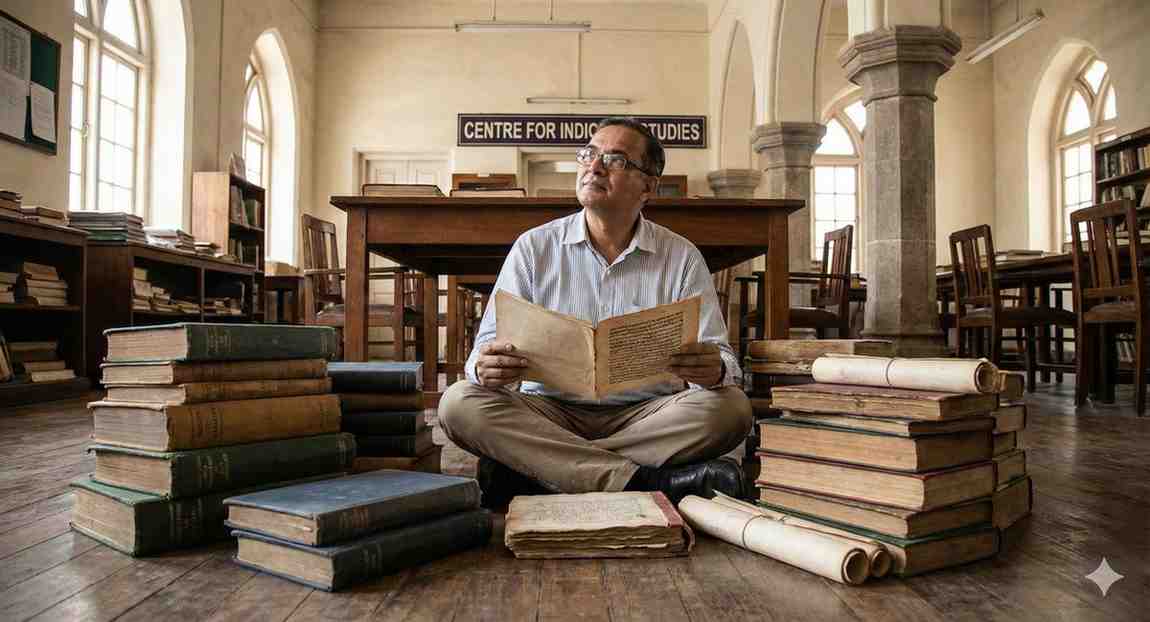
From Dharmic Roots to Political Rhetoric: Is Hinduism Losing Its Spiritual Core?
Hindu philosophy, one of the oldest and most profound systems of thought, has taken center stage in contemporary Indian discourse. Its resurgence spans spiritual, cultural, and political spheres. However, as Hinduism is increasingly invoked in public life, a critical question arises: Are we truly connecting with its core teachings, or are we reducing it to a tool for modern agendas?
The Global and National Renaissance of Hindu Philosophy
Globally, practices rooted in Hindu traditions like yoga and meditation have gained widespread popularity. According to the Ministry of Ayush’s 2023 report, yoga contributed significantly to India’s global soft power, with International Day of Yoga celebrations observed in over 190 countries. Yet, scholars argue that the spiritual and philosophical contexts behind these practices often get lost in translation. While yoga studios flourish, the integral teachings of Patanjali’s Yoga Sutras—centered on self-discipline and inner transformation—rarely receive attention.
In India, government initiatives have further spotlighted Hindu traditions. The Ministry of Culture recently allocated over ₹5,000 crore for temple restoration, manuscript preservation, and cultural events under its “Kala Sanskriti Vikas Yojana.” The government’s push for Sanskrit education through initiatives like the New Education Policy 2020 has also encouraged a revival of traditional knowledge systems. However, many educators warn that merely institutionalizing Hindu elements without deep engagement with their philosophies may lead to tokenism rather than transformation.
Political Narratives and the Commodification of Religion
The intersection of Hinduism with political rhetoric has heightened in recent years. A Pew Research Center survey in 2021 revealed that nearly 64% of Indians believe that being Hindu is essential to being “truly Indian.” This sentiment reflects how Hindu identity is increasingly linked with nationalism. While this has led to significant projects, such as the Ram Mandir in Ayodhya, critics argue it risks overshadowing the religion’s broader universal principles of harmony and inclusion.
Moreover, public debates often focus on symbols rather than substance. For instance, while the government celebrated the reconstruction of the Kashi Vishwanath Corridor, intellectuals like historian Romila Thapar have questioned whether these developments genuinely deepen our understanding of Hindu philosophy or merely serve political ends.
Revival Efforts: Superficial or Substantive?
While efforts to revive Hindu practices have gained momentum, they often focus on visible, ritualistic aspects. Festivals like Kumbh Mela, which drew over 240 million visitors in 2022 according to official estimates, are celebrated with great fervor. Yet, their spiritual essence—seeking liberation (moksha) through self-realization—often takes a backseat to grandeur and spectacle.
“Modern revivals must focus on the teachings of texts like the Bhagavad Gita, which emphasize inner ethics and selfless action, rather than just celebrating rituals,” said Dr. Radhika Deshpande, a scholar of comparative religion.
Finding a Balanced Approach
To ensure a meaningful revival, India must focus on integrating Hindu philosophy into education and public discourse. The National Education Policy’s push to include traditional knowledge systems in curricula provides an opportunity to reintroduce the youth to Hinduism’s rich philosophical dimensions. Beyond schools, interfaith dialogue and academic seminars can foster a deeper understanding of Hinduism’s relevance in today’s world.
Hindu philosophy, with its timeless emphasis on dharma (righteousness), satya (truth), and atman (self-realization), has the potential to guide humanity through modern challenges. But to achieve this, we must move beyond surface-level celebrations and reclaim its essence through introspection, education, and genuine spiritual practice. Only then can India truly rediscover the profound legacy of its dharmic roots.
Leave a Reply