
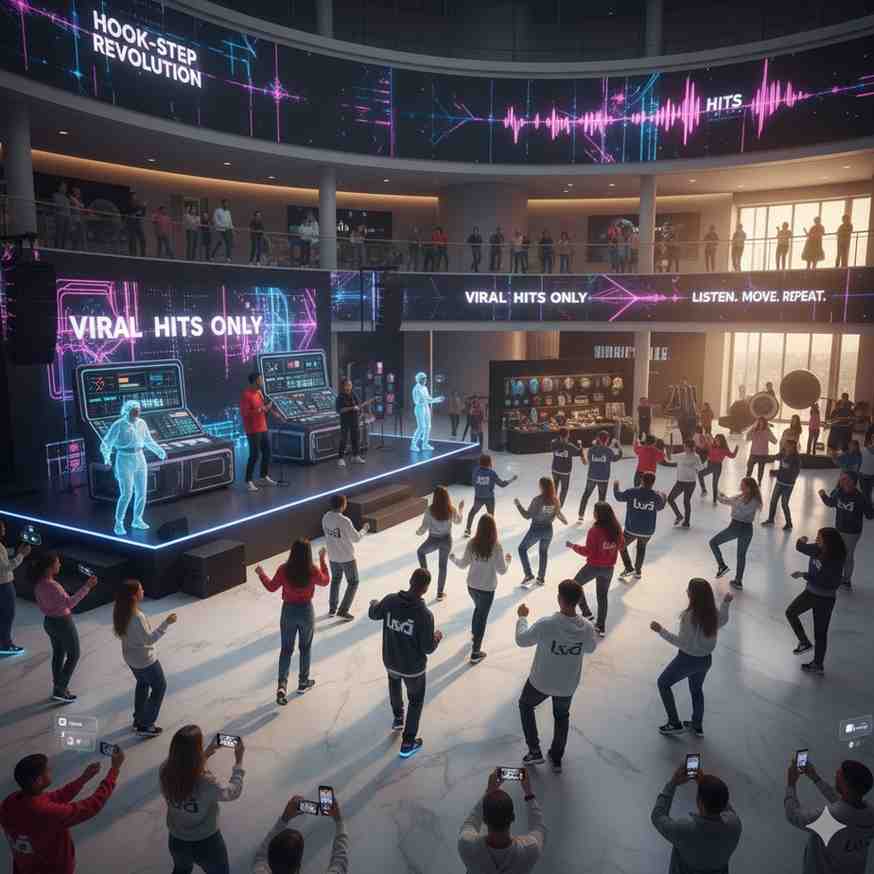
Key highlights
- The hook step is now a marketing asset, not just choreography.
- Songs are being built for repeatable seconds.
- Virality can create attention; it rarely creates lasting music.
A film song used to travel slowly. You heard it again and again until it became part of your season—weddings, college events, traffic jams, late-night headphones.
Today, many songs are engineered differently. They’re built like bait: the chorus arrives fast, the step is simple, the shot is clean, the beat is cut for looping. The song is no longer only music. It’s a clip waiting to happen.
This is not automatically evil. Pop culture has always had catchy hooks. But when hook becomes the entire purpose, music becomes hollow. You get a sound that trends without a melody that stays. You get something you can copy but not something you can feel.
For you, the test is personal and cruelly simple: do you remember the full song—or only the fifteen seconds? If only the fifteen seconds survives, then music has been downgraded into marketing.
In 2026, this will intensify because the industry has learned a harsh truth: a viral hook can sell a film, or at least keep it in conversation. But the deeper truth is older: songs build legacy. Clips build noise.
The healthiest future for Bollywood music is not “anti-viral.” It’s balanced. Give people a hook they can dance to, yes—but also give them a tune they can carry when the phone is silent. Otherwise, music becomes disposable content: loud for a day, dead by next week.
Hook-step marketing can buy attention. Only real music buys memory.
Leave a Reply