
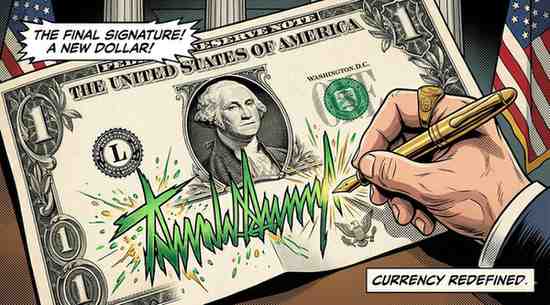
Washington D.C., March 2026 — In a move that breaks over a century of American fiscal tradition, President Donald Trump’s signature is set to appear on U.S. dollar bills. This unprecedented decision marks the first time in history that a sitting president’s name will be printed on the national currency, sparking a heated debate over the potential “branding” of the greenback.
Breaking a Century of Tradition
For more than 100 years, U.S. banknotes have exclusively carried the signatures of the Treasury Secretary and the Treasurer of the United States. Under the new redesign, Trump’s signature will appear alongside Treasury Secretary Scott Bessent, effectively replacing the space traditionally reserved for the Treasurer.
The administration has positioned the change as a commemorative effort for America’s 250th anniversary. The first batch of these redesigned $100 bills is expected to enter circulation as early as June 2026.
Branding the National Treasury?
Critics argue that this is less about national celebration and more about personal legacy. They point to a consistent pattern where the President has sought to “stamp his name” on federal institutions—from stimulus checks to proposed coins and the renaming of landmarks.
While legal experts confirm the move is technically permitted under federal law, they describe it as “highly unusual”. Some numismatists suggest these specific notes may become high-value collector’s items due to their historical anomaly, regardless of the political fallout.
A Volatile Backdrop for the Greenback
The timing of the announcement has raised eyebrows in financial circles. The U.S. dollar recently hit multi-year lows against major global currencies following a volatile 2025 marked by significant “tariff shocks”.
Economists are questioning the utility of a currency redesign during a period of fiscal instability. Critics warn that placing a partisan figure’s signature on a global reserve currency could undermine its perceived neutrality. Conversely, the administration maintains that the redesign will strengthen the national identity of the currency during a time of global economic pressure.
Bottom Line
The era of the “neutral” dollar bill appears to be ending. While supporters see it as a bold tribute to American leadership for the upcoming semiquincentennial, opponents view it as an unnecessary politicization of a national symbol. As the first “Trump Dollars” hit the streets this summer, the world will watch to see if this historic change bolsters the currency’s prestige or further divides the public.
Leave a Reply