
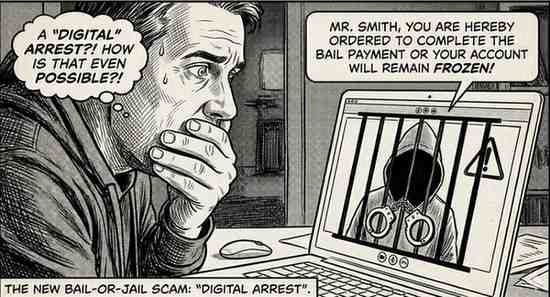
New Delhi, January 2026 — A massive leak in the digital ecosystem has exposed the “Data Underworld” that fuels nearly every scam call hitting Indian smartphones today. The investigative report reveals that what consumers consider “private information”—including bank balances, home addresses, and even food preferences—is being traded openly in a black market that operates with clinical precision.
The “Digital Footprint” Harvest
The scam doesn’t begin with a phone call; it starts months earlier with a single click. Every time a user signs up for a “free” discount coupon, enters a lucky draw at a mall, or downloads an unverified utility app, their data is harvested.
- The Aggregators: Specialized “data brokers” compile these fragments into a “Lead List.”
- The Profiling: These lists aren’t just names and numbers. They are categorized by “Spending Power,” “Age Group,” and “Credit Score,” allowing scammers to tailor their attacks.
- The Price: High-quality leads—such as a list of people who recently applied for a home loan—can sell for as little as ₹2 to ₹5 per contact on encrypted messaging platforms like Telegram.
The “Service” Deception
The video highlights how scammers use this data to bypass a victim’s natural suspicion. By knowing a person’s recent bank transaction or their last online purchase, the fraudster gains “Instant Authority.” When a caller knows your full name, your father’s name, and the last four digits of your card, the brain stops treating the call as a “scam” and starts treating it as “service.” This psychological bridge is what allows scammers to extract OTPs or convince victims to download screen-mirroring apps like AnyDesk.
The “Corporate Leak” Reality
Perhaps the most alarming segment of the report is the involvement of insiders. It is estimated that a significant portion of high-value data leaks directly from the employees of telecom companies, insurance firms, and even bank branches. Low-level employees with access to customer CRM systems often “export” databases to supplement their income, feeding the very syndicates that eventually target those same customers.
The Toll on the Digital Economy
The scale of this data-driven fraud has led to a “Trust Deficit” in India’s digital growth.
- The Impact: Thousands of citizens have lost their life savings to “pre-approved loan” scams or “electricity bill” frauds, all powered by leaked data.
- The Scale: Over ₹10,000 crore is estimated to have been siphoned off through cyber-fraud in the last year alone, with data leaks being the primary entry point for 90% of these crimes.
How to “Seal” Your Data Leaks
Security experts featured in the video advise a “Data Diet” to minimize risk:
- Avoid Public Wi-Fi for Banking: Scammers use “Man-in-the-Middle” attacks to sniff data on open networks.
- The “Minimum Info” Rule: Never provide your phone number or email at retail checkouts or for “Free Gifts” unless absolutely necessary.
- App Permissions: Regularly audit your phone. If a “Calculator” app is asking for access to your Contacts or Location, delete it immediately.
Bottom Line
In the 21st century, data is the new oil—but for scammers, it is the new ammunition. The video serves as a grim reminder: if you aren’t paying for the product, you and your data are the product. Protecting your privacy isn’t just about “settings”; it’s about breaking the habit of oversharing in a world that is always listening.
Leave a Reply