
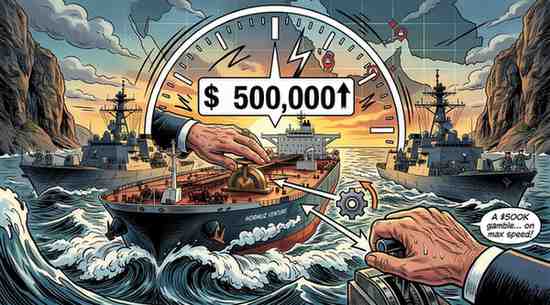
Athens, March 11, 2026 — While global shipping giants divert their fleets to avoid the volatile Strait of Hormuz, one Greek shipping empire is steering directly into the conflict zone. George Procopiou’s Dynacom Tankers has continued to operate through the world’s most dangerous maritime choke point, chasing extraordinary profits despite active war risks and the cancellation of standard insurance policies.
The move has sparked a fierce debate over “calculated business courage” versus the “unacceptable risk” to human life.
The $500,000-a-Day Reward
The motivation behind this high-stakes maritime roulette is a massive surge in freight rates. Since the assassination of Iran’s Supreme Leader and subsequent U.S.-Israeli air strikes, the 30-mile-wide strait has become effectively impassable for most.
However, for those willing to brave the waters, the financial rewards are astronomical. A single tanker sailing through the strait toward China can now earn roughly $500,000 per day. According to maritime analysts, Dynacom has sent at least five ships through the passage since the conflict erupted, including the massive 150,000-metric-ton Pola.
‘Going Dark’ to Evade Detection
To mitigate the risk of being targeted by Iranian missiles or drones, Dynacom vessels are reportedly employing “dark” transit tactics. Crews have been ordered to switch off their vessel transponders—devices that normally broadcast a ship’s live location—before entering the mouth of the Gulf.
Ships effectively “vanish” from public tracking systems like MarineTraffic, reappearing only after they have successfully cleared the danger zone. This practice has drawn sharp criticism from international observers who argue it complicates rescue efforts and maritime safety.
Seafarers at Risk: 100% Hazard Bonuses
The International Transport Workers’ Federation (ITF) has condemned the strategy, warning that “no worker should be forced to risk being killed simply for doing their job”. The danger is not theoretical: at least 10 cargo vessels have been hit and three seafarers killed since the conflict escalated.
To keep ships moving, operators are offering extreme incentives:
- Double Pay: Seafarers who agree to enter the zone receive a 100% hazard bonus.
- Compensation: Death and disability benefits have been doubled.
- Right to Refuse: While sailors theoretically have the right to refuse the assignment, the financial pressure and bonuses make it a difficult choice for many.
The Tycoon Under Fire
George Procopiou is no stranger to geopolitical controversy. Controlling a fleet of over 150 vessels, he has previously stated that international sanctions “have never worked”. His company was briefly labeled an “international sponsor of war” by Ukraine earlier in the decade, a designation that was later removed. Now, his fleet is once again the center of global attention for navigating a blockade that most of the world considers suicidal.
Bottom Line
The era of the “Hormuz Gamble” has turned the world’s most critical energy artery into a playground for the bold and the desperate. While Dynacom harvests $500,000 daily premiums, they are doing so by asking seafarers to navigate blind through an active war zone. As insurance companies retreat, the question remains: is any daily rate worth the price of a human life if the gamble eventually fails?.
Leave a Reply