
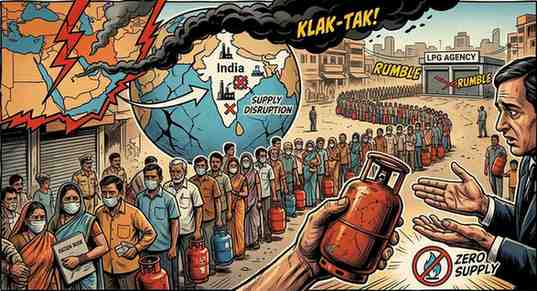
New Delhi, March 2026 — A geopolitical standoff thousands of kilometers away has abruptly extinguished the flames in Indian kitchens. What authorities describe as a managed situation, citizens call a full-blown crisis, with thousands queueing from 2:00 AM just to secure a single LPG cylinder.
The “No Shortage” Illusion
The official stance from the Ministry of Petroleum has been rigid: there is no shortage of LPG. In reality, the situation on the ground is dire. With the Strait of Hormuz blocked due to escalating conflicts involving the US, Israel, and Iran, India’s primary energy artery is choked. Prices have already surged over 7%, pushing a cylinder past ₹900, yet even with the money in hand, consumers are returning home to cold stoves and empty promises.
Digital Glitches and the 25-Day Trap
The official distribution system, reliant on digital bookings through providers like Bharatgas, is actively failing its users. Consumers report a maddening trend: cylinders are being marked as “delivered” on the app without ever reaching their homes.
This triggers a devastating bureaucratic trap. India’s LPG framework mandates a 25-day gap between bookings. If the system falsely registers a delivery, families are digitally locked out from ordering another cylinder for nearly a month, leaving them helpless while local agencies refuse accountability.
The Black Market Boom
While genuine consumers face cancelled tokens and “out of stock” signs, a parallel economy is thriving. Citizens queueing in the 35-degree heat point out a bitter irony: while official channels run dry, the black market is flush with cylinders being sold at massive premiums.
This crisis disproportionately punishes the unorganized sector. Daily wage laborers are forced into an impossible choice—go to work to feed their families, or sacrifice three days of wages standing in line just to secure the gas to cook that food.
A Supply Chain Choked
India’s vulnerability stems from its massive dependency. While 93% of urban households rely on LPG, India produces only 40% of it domestically. Of the 60% imported, 90% comes from the Gulf. Reports indicate two Iranian vessels are currently en route carrying 80,000 tonnes of LPG. The brutal math? India consumes roughly 136,000 tonnes every single day. The incoming relief is barely a drop in the ocean.
The Panic Shift to Electric
As trust in the gas supply evaporates, panic buying has taken over. Appliance stores from New Delhi to Visakhapatnam are reporting an abnormal surge in induction stove sales. Retailers who typically sold two to three units a day are now clearing out 50 units in a matter of hours, as those who can afford it desperately try to buy their way out of the crisis.
Bottom Line
The current LPG shortage exposes the severe fault lines in India’s import-heavy energy strategy. While policymakers debate long-term diversification and assure the public of adequate supplies on paper, the reality on the streets is stark: the distribution system is deeply flawed, the black market is capitalizing on desperation, and the poorest citizens are the ones paying the heaviest price.
Leave a Reply