
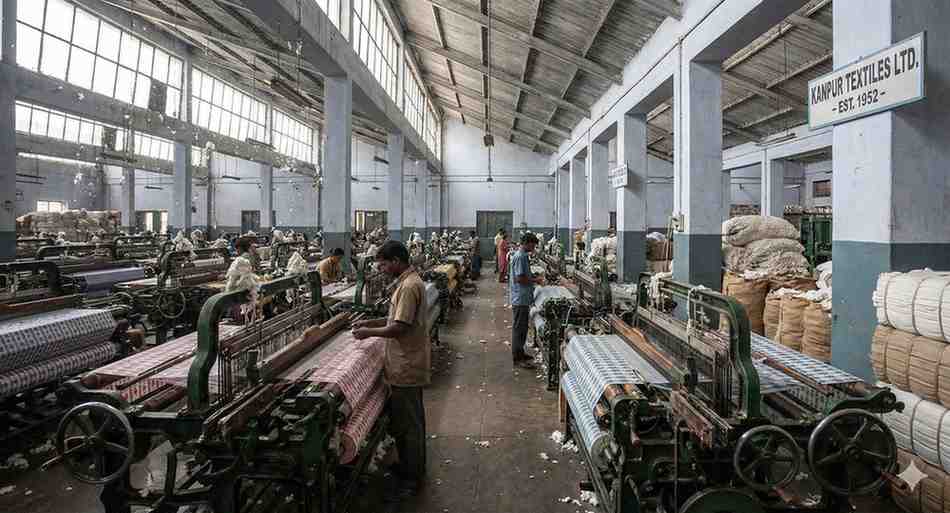
Kanpur, 2025 – Once celebrated as the “Manchester of the East,” Kanpur’s textile industry has been a cornerstone of India’s manufacturing sector for decades. However, with shifting global demands, technological advancements, and sustainability concerns, the industry faces mounting pressure to modernize. Is Kanpur’s textile sector evolving to meet global trends, or is it struggling to keep pace with the changing landscape?
Current State of the Textile Industry
According to the Ministry of Textiles, Kanpur’s textile sector accounts for approximately 12% of Uttar Pradesh’s total textile output. The city houses over 600 textile units, ranging from traditional handloom operations to large-scale manufacturing facilities. Exports from Kanpur’s textile industry, valued at ₹6,000 crore annually, contribute significantly to the state’s economy.
However, a report by the Indian Textile Association (ITA) reveals that while the sector has grown steadily, it has not matched the pace of emerging textile hubs like Tirupur or Surat, which have embraced advanced technologies and diversified product lines.
Challenges in Adapting to Global Trends
- Lack of Modernization: The Textile Machinery Manufacturers’ Association highlights that 45% of Kanpur’s textile units still rely on outdated machinery, leading to lower efficiency and higher production costs compared to global competitors.
- Sustainability Concerns: A study by the Central Pollution Control Board (CPCB) notes that textile units in Kanpur are among the largest contributors to industrial wastewater pollution in the Ganga River. With increasing global emphasis on sustainable and eco-friendly textiles, this poses a significant barrier to international trade.
- Skilled Labor Shortages: According to the Uttar Pradesh Skill Development Mission (UPSDM), only 30% of workers in Kanpur’s textile industry have received formal training, affecting their ability to operate advanced machinery or adapt to modern techniques.
- Trade Barriers: The Ministry of Commerce and Industry reports that non-tariff barriers, such as stringent environmental regulations in key export markets like the European Union, have hindered the growth of Kanpur’s textile exports.
Opportunities for Growth
Despite these challenges, Kanpur’s textile industry has opportunities to regain its competitive edge:
- Government Support: Under the Production-Linked Incentive (PLI) Scheme, ₹10,000 crore has been allocated to support textile units in adopting advanced machinery and sustainable practices. Kanpur is one of the focus regions for this scheme.
- Emerging Markets: Data from the Export Promotion Council for Handicrafts (EPCH) suggests growing demand for traditional Indian textiles in African and Southeast Asian markets, which Kanpur is well-positioned to supply.
- Technology Adoption: The Textile Technology Upgradation Fund Scheme (TUFS) has encouraged several Kanpur-based units to invest in automation and digitization, enabling them to produce high-quality fabrics that meet global standards.
Voices from the Industry
Industry stakeholders reflect a mix of optimism and caution. “The global market is evolving rapidly, and we must modernize to stay relevant,” says Ramesh Gupta, owner of a mid-sized textile unit. On the other hand, workers like Anil Kumar express concerns: “We need better training and support to keep up with new technologies. Otherwise, our jobs are at risk.”
The Road Ahead
To adapt to global trends and secure its future, Kanpur’s textile industry must focus on:
- Sustainability Initiatives: Implement eco-friendly production methods and invest in wastewater treatment plants to align with global environmental standards.
- Skill Development: Collaborate with government programs to provide training in advanced textile manufacturing techniques.
- Infrastructure Improvements: Upgrade machinery and production facilities through financial assistance from government schemes like TUFS and PLI.
- Diversification: Explore niche markets, such as technical textiles and organic fabrics, to cater to evolving consumer preferences.
Conclusion
Kanpur’s textile industry stands at a critical juncture, facing both challenges and opportunities. While the sector retains its legacy and potential, its ability to adapt to global trends will determine its future relevance and competitiveness. The question remains: Will Kanpur reclaim its position as a global textile leader, or will it risk stagnation in an increasingly dynamic industry?
Leave a Reply