
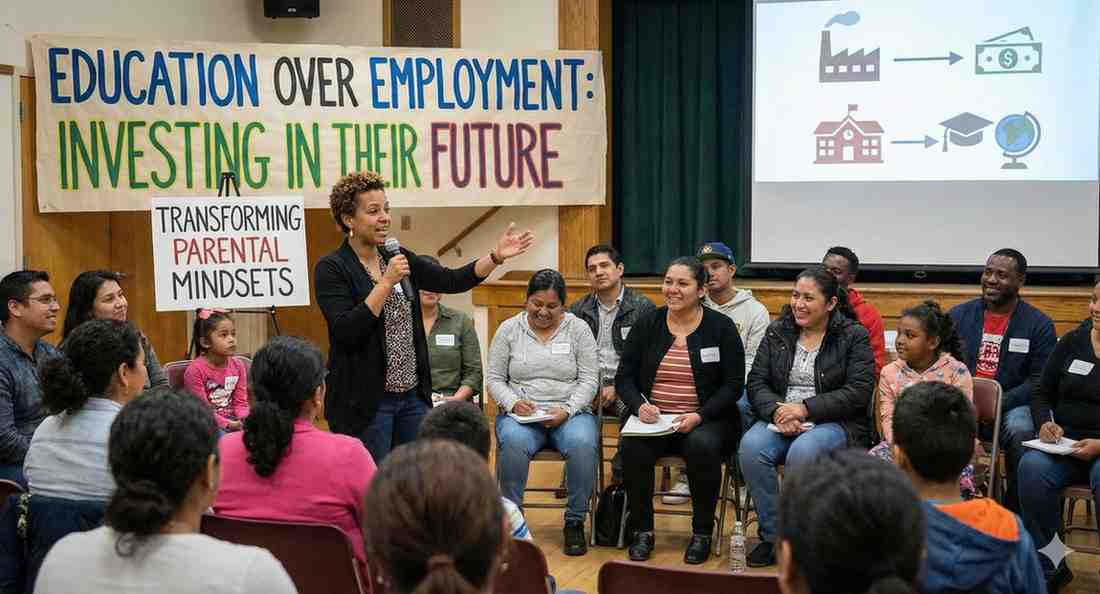
Encouraging a Shift from Job-Focused to Knowledge-Focused Education
Introduction: The Prevailing Job-Centric View In the landscape of modern education, many parents view schools primarily as gateways to secure employment for their children. This job-centric perspective often overshadows the broader benefits of education, reducing the complex process of learning to a mere transaction aimed at future financial security. However, the evolving demands of the 21st century call for a fundamental shift in how we perceive the role of education.
1. Understanding the Limitations of Employment-Focused Education
Shortcomings of a Narrow Focus
- Skill Gaps: A singular focus on job preparation might overlook crucial skills like critical thinking, creativity, and adaptability, which are essential in today’s rapidly changing world.
- Pressure and Stress: The emphasis on securing high-paying jobs can place undue stress on children, stifling their natural curiosity and passion for learning.
- Neglect of Holistic Development: Education that prioritizes employment above all else may fail to address the personal, social, and ethical development of students.
The Need for a Paradigm Shift
- Global Trends: The increasing automation of routine jobs and the rise of new industries require adaptive thinkers rather than just skilled workers.
- Lifelong Learning: In an era where continuous education is key to staying relevant, fostering a love for learning is more critical than ever.
2. Redefining the Purpose of Education
Education as a Journey of Discovery
- Broadening Horizons: Schools should focus on expanding students’ horizons, encouraging them to explore various disciplines and develop diverse interests.
- Fostering Innovation: By emphasizing critical thinking and problem-solving, education can prepare students to innovate and lead in their future workplaces and communities.
Building Character and Values
- Ethical Development: Education should also aim to cultivate integrity, empathy, and responsibility, preparing students to navigate the world as conscientious citizens.
- Emotional Intelligence: Schools play a crucial role in developing students’ emotional intelligence, which is vital for personal and professional success.
3. Practical Steps for Parents
Encouraging a Knowledge-First Approach
- Valuing Learning for Learning’s Sake: Parents can help shift the focus from grades and outcomes to the joys of learning and intellectual growth.
- Supporting Diverse Interests: Encourage children to pursue their passions, whether they lie in arts, sciences, or other areas, recognizing that each path has intrinsic value.
Engaging with Educational Settings
- Active Participation: Parents should engage with teachers and school administrators to understand and support educational philosophies that prioritize holistic development over mere job preparation.
- Advocacy: Advocate for curricular and extracurricular programs that emphasize comprehensive education rather than just college and job readiness.
4. Changing Perceptions in the Community
Community Education Initiatives
- Workshops and Seminars: Organize and participate in community workshops that educate other parents on the benefits of a holistic education approach.
- Success Stories: Share stories of individuals who have thrived by pursuing diverse educational paths, highlighting the broad benefits of a well-rounded education.
Support from Educational Leaders
- Policy Influence: Encourage school boards and policymakers to adopt and promote educational strategies that balance job preparation with comprehensive educational goals.
Conclusion: A Call to Broaden Educational Goals
It’s time for parents and educators to recognize that the true purpose of education extends far beyond securing employment. By fostering an environment that promotes a love of learning, critical thinking, and personal growth, schools can prepare students not just for a career, but for a fulfilling and successful life. Changing parental mindsets is crucial in this endeavor, as it can lead to a cultural shift that values education for its ability to enrich students’ lives in manifold ways.
This transition not only benefits individual students but also strengthens society by producing well-rounded, thoughtful individuals equipped to tackle the challenges of the future. Let us embrace a broader vision of education, where schools are seen as incubators of potential and curiosity, not just as stepping stones to the next job offer.
Leave a Reply