
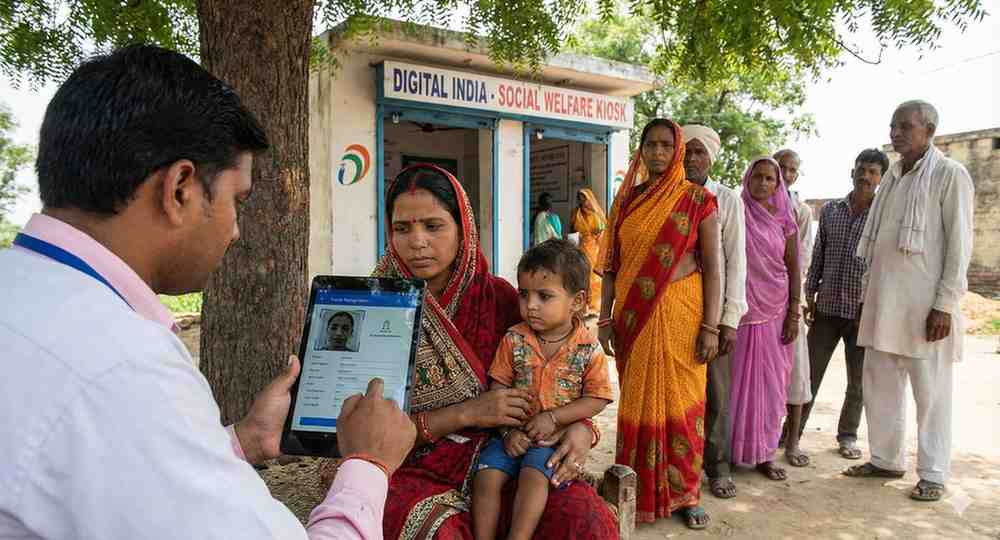
Introduction: Revolutionizing Social Welfare with Artificial Intelligence
India’s vast and diverse population poses significant challenges in delivering social welfare services effectively and equitably. Recognizing the transformative potential of Artificial Intelligence (AI), the Indian government has begun integrating AI technologies into social welfare programs to improve service delivery, reduce inefficiencies, and ensure that benefits reach the intended recipients. These initiatives are reshaping the way social programs are designed and executed, setting the stage for a more inclusive and efficient welfare system.
Key Applications of AI in Social Welfare Programs
- Targeting Beneficiaries More Effectively
AI-powered data analytics tools are being used to identify and verify beneficiaries for various welfare schemes. For example, the Pradhan Mantri Jan Dhan Yojana leverages AI algorithms to analyze socio-economic data, ensuring that the right individuals and households are targeted for financial inclusion initiatives. - Fraud Detection and Prevention
AI systems help detect anomalies in beneficiary databases, preventing fraudulent claims and duplication. In schemes like the National Food Security Act (NFSA), AI algorithms cross-verify ration cardholders with Aadhaar data, ensuring that only eligible individuals receive subsidized food grains. - Improving Healthcare Access
AI is instrumental in programs like Ayushman Bharat, where predictive analytics are used to identify vulnerable populations in need of healthcare services. AI-driven tools assist in early diagnosis and efficient allocation of healthcare resources, enhancing the program’s effectiveness. - Dynamic Resource Allocation
AI enables real-time monitoring and dynamic resource allocation in disaster relief and rural development programs. For instance, the Mahatma Gandhi National Rural Employment Guarantee Act (MGNREGA)employs AI-based systems to allocate resources for rural job creation, optimizing fund utilization and labor allocation. - Grievance Redressal Systems
AI-powered chatbots and helplines streamline grievance redressal for beneficiaries. Platforms like the MyGov Citizen Engagement Portal use AI to address queries, resolve complaints, and ensure transparency in welfare program delivery.
Government-Led Initiatives Supporting AI in Social Welfare
- Aadhaar-Linked AI Integration
The Aadhaar platform, with its vast biometric database, forms the backbone of many AI-driven welfare programs. The government uses AI to cross-check and verify data, ensuring the accuracy of beneficiary lists for schemes like PM-KISAN and Ujjwala Yojana. - Digital India Mission
As part of the Digital India initiative, the government is deploying AI to enhance e-governance. AI solutions are integrated into welfare delivery mechanisms to ensure that services are easily accessible, especially in rural and remote areas. - National e-Governance Division (NeGD)
Under NeGD, AI applications are developed and deployed to improve service delivery for welfare schemes. This includes using machine learning algorithms to analyze demographic trends and tailor programs to regional needs.
Real-World Impact
- Increased Efficiency: AI integration in schemes like Ayushman Bharat has reportedly reduced administrative delays by 30%, ensuring quicker delivery of healthcare benefits.
- Cost Savings: The use of AI for fraud detection in the NFSA has saved billions of rupees by eliminating ghost beneficiaries.
- Enhanced Outreach: AI-powered beneficiary identification systems have helped programs like PM-KISAN expand their reach, providing financial aid to over 11 crore farmers.
Challenges and Opportunities
- Data Privacy Concerns: The use of sensitive personal data raises concerns about privacy and security, emphasizing the need for robust data protection frameworks.
- Digital Divide: Limited access to digital infrastructure in rural areas can hinder the equitable deployment of AI technologies.
- Capacity Building: Training program administrators and officials to effectively use AI tools is critical for long-term success.
Conclusion: Pioneering a New Era in Welfare Delivery
The integration of AI into India’s social welfare programs marks a significant step toward a more efficient, inclusive, and transparent service delivery model. By addressing existing challenges and scaling up AI initiatives, the government can ensure that the benefits of technology reach every corner of the nation. As these efforts evolve, they promise to not only transform the landscape of social welfare but also establish India as a global leader in leveraging AI for societal impact.
Leave a Reply