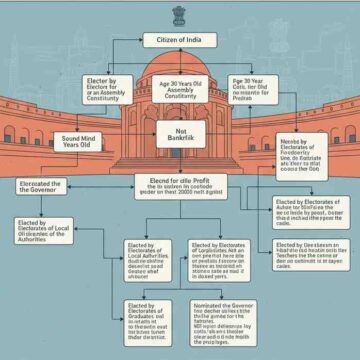
Key highlights First, what is an MLC? MLC = Member of the Legislative Council (Vidhan Parishad). Only some states have a Legislative Council. Councils include members chosen through different routes (elected or nominated), but the baseline eligibility logic remains: age, citizenship, and voter/ residency linkage to the state. India Code+1 Minimum qualifications (the non-negotiables) 1) Age...
Category: Society & Culture
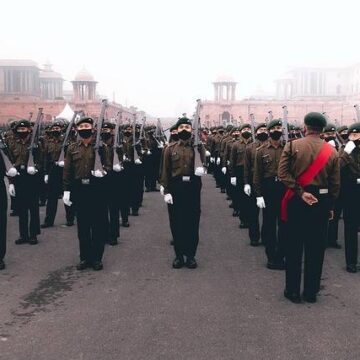
Army Day (Jan 15): Why This Date Is Observed in India
Key highlights Army Day is observed on 15 January because of a specific historical event: in 1949, General (later Field Marshal) K.M. Cariappa took over as the first Indian Commander-in-Chief of the Indian Army after independence, succeeding the last British Commander-in-Chief. That origin matters because it anchors the observance in an institutional turning point. Over time, Army...
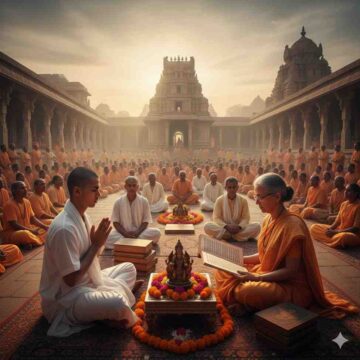
The Relationship Between Devotion and Knowledge in Hinduism
A Harmonious Path to Spiritual Realization Hinduism, one of the world’s oldest spiritual traditions, intricately weaves together the seemingly distinct paths of devotion (bhakti) and knowledge (jnana), presenting them as complementary rather than conflicting. While bhaktiemphasizes surrender and love for the divine, jnana focuses on intellectual inquiry and self-realization. Together, they form a unified approach to understanding existence,...
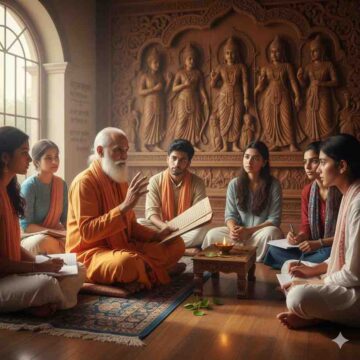
Vedic Insights on Leadership: Lessons for Today’s Society
Ancient Wisdom for Modern Challenges In a world grappling with ethical dilemmas, political turmoil, and corporate mismanagement, the timeless wisdom of the Vedas offers a blueprint for leadership rooted in integrity, selflessness, and vision. Far from being confined to ancient rituals or philosophical musings, Vedic principles on leadership emphasize harmony, ethical governance, and service to...
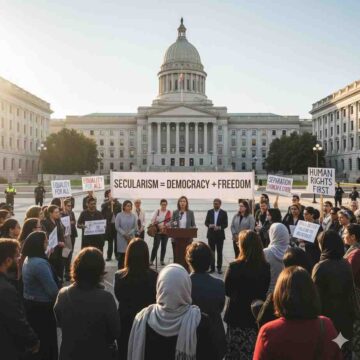
The Importance of Secularism in Upholding Democratic Values
New Delhi – Secularism, the cornerstone of India’s constitutional ethos, is integral to preserving and promoting the country’s democratic values. In a nation marked by its extraordinary religious diversity, secularism acts as the balancing force, ensuring that the state remains neutral in matters of faith and upholds the rights of every individual. Yet, in recent years,...
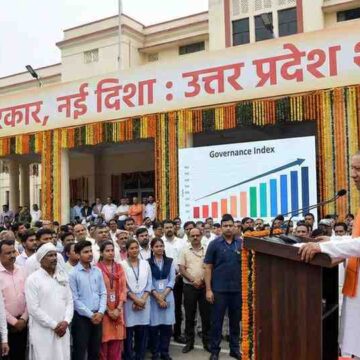
Recent Political Changes and Their Impact on Governance in Uttar Pradesh
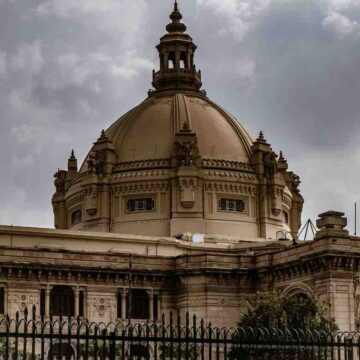
Uttar Pradesh (UP), India’s most populous state, represents a critical arena for understanding the interplay between political dynamics and governance outcomes. Recent political shifts in the state have prompted significant transformations in policy priorities, administrative structures, and public service delivery mechanisms. This analysis examines how these changes are influencing governance effectiveness, transparency, and inclusivity. Political...
How Do Vedic Teachings Address Issues of Social Justice?
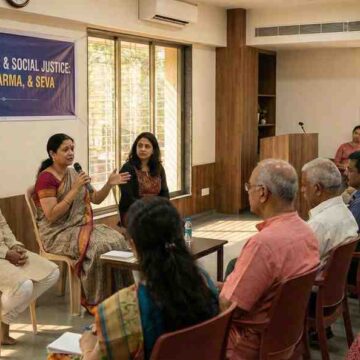
“Harmony and Balance: Exploring Social Justice Through the Lens of Vedic Philosophy” Vedic teachings, often associated with spirituality and metaphysics, also contain profound insights on ethical governance, human rights, and societal balance. At their core, the Vedas emphasize rita (cosmic order) and dharma (righteousness), which extend beyond individual morality to encompass social justice. While the texts were written in...
Will Political Polarization in Uttar Pradesh Lead to Unprecedented Change?
Polarization: A Mechanism for Transformation or an Obstacle to Progress? Uttar Pradesh, India’s most populous and politically influential state, occupies a unique position in the national political framework as a microcosm of the country’s socio-political complexities. Historically characterized by deeply entrenched caste hierarchies, religious stratification, and regional disparities, the state remains a crucible of political...
The Role of Women in UP’s Politics: Progress or Tokenism?
Breaking Barriers or Maintaining Facades?Uttar Pradesh, with its vast population and significant political influence, has long been a microcosm of India’s democratic journey. Women, who constitute nearly half of the state’s population, are increasingly finding space in the political arena. However, the question remains: Does this representation signify genuine progress or merely tokenism in a...
Shastras and Spiritual Leadership: Guiding Principles for Today
Ancient Wisdom for Modern Leadership The Shastras—sacred scriptures in Hinduism—serve as profound repositories of wisdom, offering timeless principles on governance, ethics, and leadership. From the Bhagavad Gita to the Arthashastra, these texts emphasize that true leadership arises from selflessness, vision, and alignment with universal principles. In today’s fast-paced world, where ethical lapses and power struggles often dominate headlines, the...