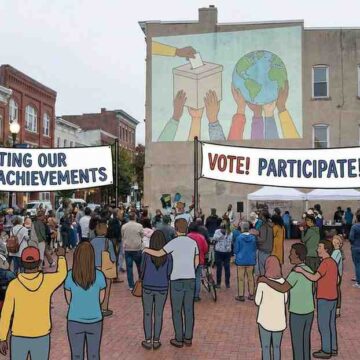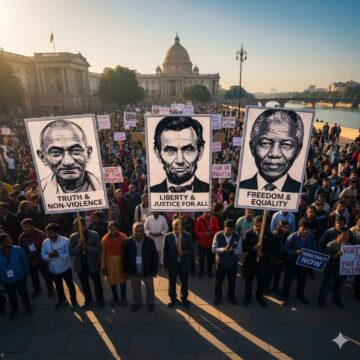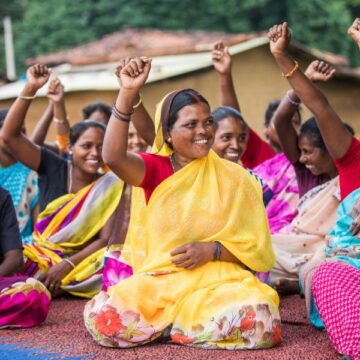
New Delhi, 2025 — Local governance in India is foundational to the democratic process, with elected officials such as Paarshads, Pradhans, and Sarpanchs playing critical roles in their communities. As the closest form of government to the people, these local entities are instrumental in fostering democratic engagement and addressing localized issues. Recent government reports underscore the...
Category: India
Is Nationalism Key to Economic Prosperity in India?
New Delhi, 2025 — As India navigates its path towards becoming a global economic powerhouse, the role of nationalism in fostering economic prosperity has become a subject of considerable debate. The resurgence of nationalism, particularly influenced by Neo-Hinduism, a revivalist movement that began in the 19th century, has shaped much of India’s modern identity and policy-making....
Are We Seeing a Genuine Political Awakening in Uttar Pradesh?
A Crucial State in India’s Political Fabric Uttar Pradesh, India’s most populous state, has long been a bellwether for national politics. With its vast electorate, deeply ingrained caste and religious dynamics, and decisive role in shaping Lok Sabha outcomes, the state remains a focal point of India’s political landscape. The question now arises: Is Uttar...
UP’s Political Future: Is It Bright or Bleak?
India’s Heartland at a Turning Point Uttar Pradesh (UP), the largest and most politically influential state in India, often serves as a microcosm of the nation’s political trends. With its diverse population, complex socio-political dynamics, and pivotal role in national governance, the trajectory of UP’s political future raises a critical question: Does it hold promise,...
The Role of National History in Shaping Contemporary Democracy
New Delhi, 2025 — In a world grappling with rapid modernization and globalization, the significance of national history in defining and nurturing democratic values has never been more apparent. For India, a nation whose democratic ethos is deeply intertwined with its historical journey, revisiting and preserving its past is essential not only for understanding its present...
Is It Worth Paying High Fees for Your Child’s School?
In India, where education has long been seen as the gateway to success, many parents are faced with the dilemma of whether it’s truly worth paying exorbitant fees for their child’s schooling. With the rise of premium schools boasting world-class facilities, international curricula, and highly qualified staff, it can be tempting to think that paying...
Why Infrastructure Alone Isn’t a Sign of Good Education
Beyond the Facade: Unpacking the Real Markers of Educational Excellence in India In India, the race to secure the “best” education often leads parents to schools boasting extravagant campuses, high-tech classrooms, and impressive facilities. Sprawling playgrounds, multi-story libraries, and state-of-the-art auditoriums are showcased as symbols of prestige and quality. However, while infrastructure adds a layer...
The Need for a Political Revolution: Can Youth Lead the Charge?
Examining the potential of India’s youth to transform the nation’s political landscape. Introduction With over 65% of India’s population under the age of 35, the youth are not only the country’s largest demographic but also its most dynamic force for change. Yet, despite their numbers, their voices remain underrepresented in political decision-making. As challenges like corruption,...
Political Promises in UP: Hopeful Declarations or Tactical Maneuvers?
The Power of Promises in India’s Heartland In Uttar Pradesh (UP), political promises are the cornerstone of election campaigns. From infrastructure projects and welfare schemes to job creation and communal harmony, parties vow to address a wide array of voter concerns. Yet, as the state prepares for its next electoral cycle, the question arises: Are...
The Future of Political Parties: How Can They Attract Young Leaders?
Exploring strategies to engage and empower the next generation of political influencers. Introduction In a rapidly evolving political landscape, the need for young leaders in Indian politics has never been more urgent. With over 65% of India’s population under the age of 35, engaging youth is not just a demographic necessity but a strategic imperative for...