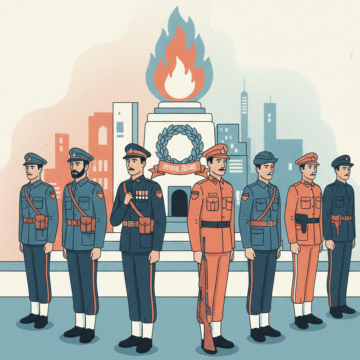
Key highlights Martyrs’ Day doesn’t compete for attention the way festival days do. It doesn’t need to. Its power is the opposite: a national pause that asks for seriousness, not spectacle. Government-linked communication around Martyrs’ Day repeatedly anchors the public practice of observing two minutes’ silence at 11:00 am in remembrance of Mahatma Gandhi. India Energy Week The date—30...
Category: India Now
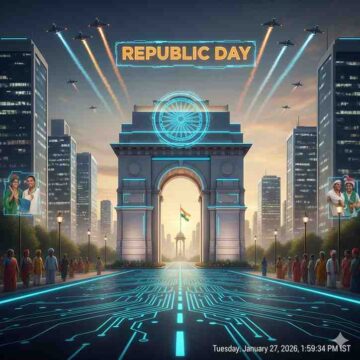
Republic Day 2026: the Constitution in practice, and the quiet logistics behind the spectacle
Key highlights Republic Day is India’s yearly reminder that the nation is not held together by emotion alone—it’s held together by a document, and the discipline to live by it. The official Rashtraparv portal (MoD) describes Republic Day as commemorating the Constitution’s adoption and enforcement in 1950, and it serves as the government’s information hub...
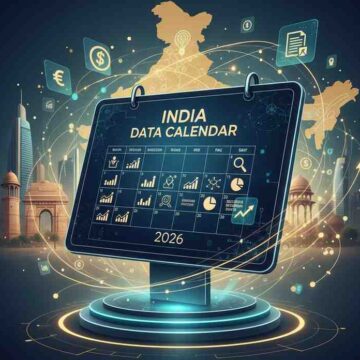
January 2026 “India Data Calendar”: The Dates That Decide Headlines Before They’re Written
Key highlights If you want clean, defensible journalism in January 2026, you don’t start with gossip—you start with schedules. The MoSPI Advance Release Calendar exists for a reason: official data doesn’t arrive randomly, and serious coverage shouldn’t either. Stats & Programme Ministry In editorial operations, the ARC is the quiet difference between a newsroom that chases...
President’s Address to Joint Session 2026: Meaning, Timing Pattern, and Why the Motion of Thanks Is the Real Battle
Key highlights If the Union Budget is the “money speech,” the President’s Address is the “meaning speech.” It’s the ceremonial opening—yes—but it’s also the government’s first big narrative moment of the Budget Session: what the country should believe the government is trying to do. Official parliamentary procedure documents explain the President’s Address framework and the...
What Will the Old Parliament Be Used For Now? Museum Plans and Public Debate
Key highlights People want a clean answer: “Museum or not?” The reality is messier. Institutional buildings don’t flip overnight—they transition through planning, approvals, and public narrative. What’s clear (and already operational) India’s Parliament ecosystem already includes a Parliament Museum, formally inaugurated years ago, and digital systems designed to make parliamentary history accessible. Press Information Bureau+1Rajya Sabha’s official...
Oil & Gas Outlook 2026: Imports, Pricing Risk, and Refinery Strategy
Key highlights If you want the real oil-and-gas outlook for 2026, stop looking at price predictions alone. Start looking at exposure: how much of your economy’s energy bill is linked to variables you don’t control. What the official data backbone says PPAC publishes recurring snapshots and reports on consumption and trade flows, including monthly/periodic indicators that...
National Youth Day 2026: Swami Vivekananda’s Message as India’s Modern Youth Strategy
(Key Highlights) PIB notes that the Government of India observes January 12 as National Youth Day every year since 1985, and the week commencing that day as National Youth Week. Press Information Bureau In a world of short attention spans, National Youth Day works best when it’s not treated as a motivational poster. Treat it like a strategic checkpoint: if you’re...
Indian Railways 2026: What Route Upgrades Could Mean for Travel
Key highlights What “route upgrades” include (not just new trains) Scenario: why your “same route” may feel different Take a corridor where passenger trains often get held up behind freight. If freight gets a cleaner path (through capacity expansion or freight-corridor diversion), passenger trains may face fewer unscheduled holds. That doesn’t magically guarantee punctuality—but it...
How CPI Data Is Collected: Coverage, Markets Sampled, and Why Trust Is Earned
Key highlights Trust in inflation data isn’t built by saying “official.” It’s built by showing the machinery behind the number. One of the most underused pieces of CPI communication is the operational detail on how price collection actually happens. The official note explains that NSO collects price data from a defined network: 1181 villages and 1114 urban markets,...
E-Governance in ULBs 2026: Online Services and Ground Reality
Key highlights What citizens can increasingly do online in 2026 Across many cities, the common digital services bucket includes: UP’s e-Nagarsewa listing shows the direction: citizen services are being packaged for online access rather than only counter-based workflows. National Government Services Portal Why the “ground reality” still feels messy Digital portals don’t automatically fix: NUDM’s stated...