
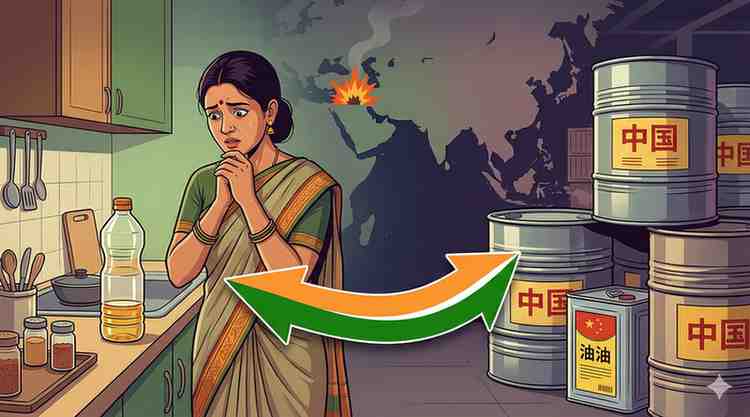
NEW DELHI, March 2026 — India, the world’s largest importer of edible oils, is undergoing a significant shift in its sourcing patterns. Facing a sharp rise in domestic kitchen costs due to the escalating West Asia conflict, New Delhi is increasingly turning to China to secure its supply of cooking oil and stabilize rising food inflation.
The “Kitchen Crisis”: 15% Price Surge
Retail prices for essential edible oils—including soybean, rice bran, groundnut, and sunflower oil—have surged by 10% to 15% in recent weeks. For many households, this translates to a hike of nearly ₹15 to ₹20 per liter.
The price spike is a direct fallout of the war in West Asia, which has disrupted traditional energy and trade routes. Since India meets only about 40% of its edible oil requirements through domestic production, it remains highly sensitive to global supply chain volatility.
The Strategic Pivot to China
In a notable departure from traditional partners like Argentina, Brazil, and Ukraine, India is tapping into China’s growing exportable surplus of soybean oil. The move is driven by two primary factors:
- Proximity and Freight: Chinese ports offer a significant logistics advantage over South American sources. This geographical closeness translates to a discount of roughly $20 to $30 per ton on freight costs.
- Surplus Production: China frequently generates an excess of soybean oil as a byproduct of its massive “soya bean crushing” industry, which primarily produces oil meal for livestock.
Experts predict that if the regional conflict persists, China’s share in India’s soybean oil imports could jump from 13% to as high as 20%.
Beyond the Kitchen: The FMCG Impact
The surge in oil prices is not just a household concern; it is a critical input for India’s massive Fast-Moving Consumer Goods (FMCG) sector. Industries producing cosmetics, soaps, and processed food items are feeling the pinch, adding broader pressure to the national inflation index.
The Geopolitical “Grand War”
Economists argue that this shift represents a small battle in a much larger “grand war” for energy and economic dominance between the U.S. and China. While the U.S. remains heavily reliant on traditional gas and oil, China has spent years electrifying its economy and securing discounted energy from sanctioned nations like Iran.
Government officials have assured the public that there is “no need for concern,” as sufficient stocks are being sourced from alternative markets to stabilize retail prices in the coming days.
Bottom Line
The conflict in West Asia has inadvertently handed a diplomatic and economic win to Beijing. By offering a cheaper, faster alternative for India’s essential cooking oil needs, China is solidifying its role as a critical supplier in a shifting global trade landscape.
Leave a Reply